Dog and cat microchips: the law and keeping details updated
A microchip only brings a lost dog or cat home if the details linked to its number are up to date. In Spain, microchipping is compulsory for dogs, cats and ferrets, and every pet must be recorded in the companion animal registry of its autonomous community (region). The chip only stores a number. What brings a lost pet home is that this number leads to a current phone number and address, so every house move, new mobile number or adoption should end with an update to the registry.
What a microchip is and what it is not
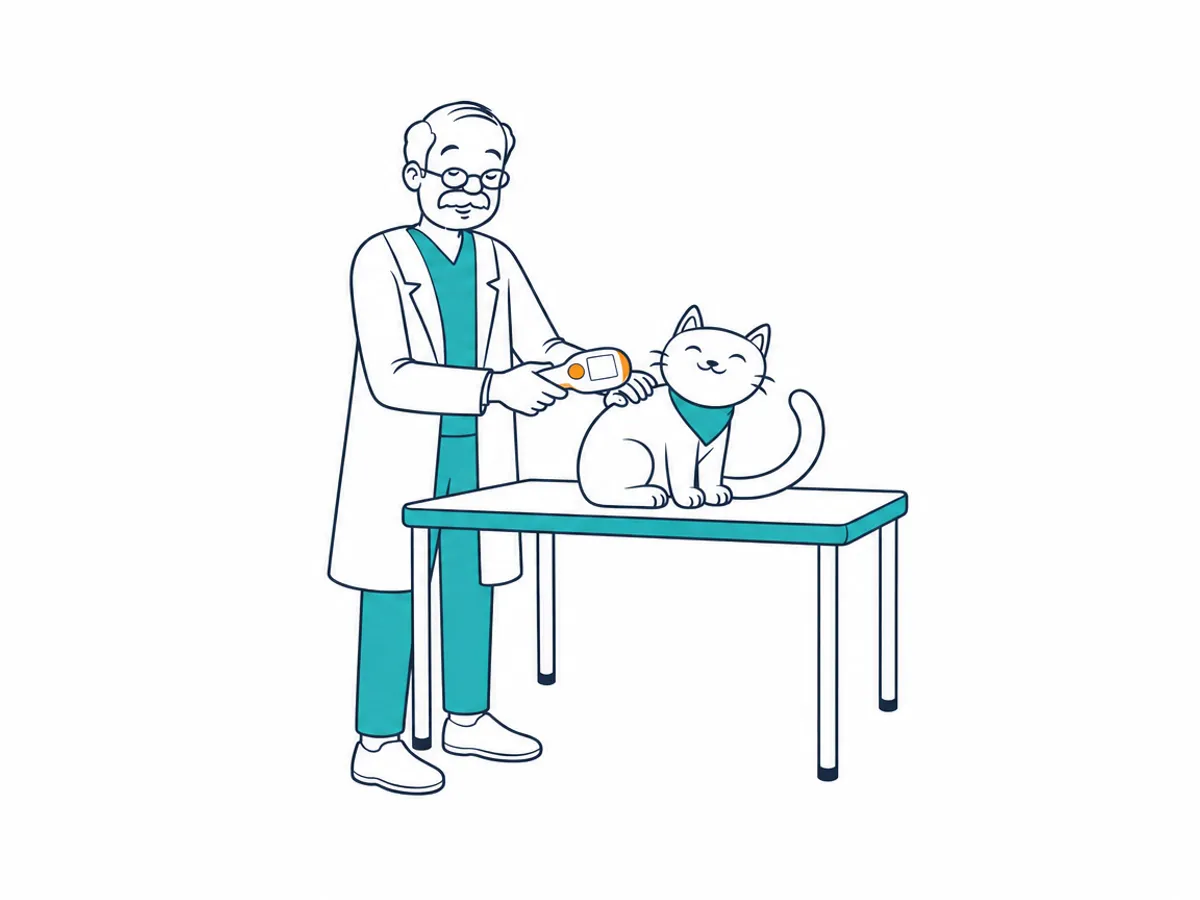
A microchip is an electronic device the size of a grain of rice that a vet places under the skin with a needle, during a routine appointment and without anaesthetic; it hurts no more than a vaccination. It has no battery: when a reader is passed over it, the chip is activated and transmits its identification number, which is unique to each animal.
That number is all it contains. Your name, phone number and address are not on the chip; they are held in the registry where your pet was recorded.
Nor is it a tracker: a microchip is not a GPS device and cannot tell you where your dog or cat is. It does not replace an ID tag with your phone number on the collar either, which lets people call you without a trip to the vet; the chip is what remains if the collar is lost.
Is microchipping compulsory in Spain?
Yes. Spain’s Law 7/2023 on the protection of animal rights and welfare, in force since 29 September 2023, requires dogs, cats and ferrets to be identified with a microchip (art. 51). The essentials:
- Who implants it: a licensed vet.
- Where it is recorded: in the Registro de Animales de Compañía (companion animal registry) of each autonomous community.
- Cats, including indoor cats: the law requires all cats to be microchipped and neutered before six months of age, except those registered as breeding animals in the name of a registered breeder (art. 26 i).
- What counts as “identified”: an animal that carries the identification system for its species and is also recorded in the registry (art. 3 h). A chip without registration is not enough.
Each community also has its own regulations, with deadlines and procedures that vary; your vet practice can advise you.
What REIAC is and what it does
Because each community keeps its own registry, there is REIAC, the Red Española de Identificación de Animales de Compañía (Spanish Companion Animal Identification Network): a non-profit association bringing together the databases of Spain’s 17 autonomous communities plus Ceuta and Melilla. Its aim is to connect them, with each other and with networks in other countries, to help recover lost pets.
Its website, reiac.es (in Spanish), has a public search tool, “Localizar chip”, for looking up a microchip number among animals registered in Spain. It also reminds owners that, before moving a pet to another community, some formalities must be completed in the communities involved. Your own details, however, are updated in your community’s registry.
How a found animal’s chip is read
Nothing is visible to the naked eye: the number only appears when a reader is passed over the chip, like the ones used at vet practices. That is why people who find a dog or cat usually go to a vet or the municipal animal collection service, as town halls in Spain are responsible for collecting lost and abandoned animals (art. 22). The number is then checked against the registry to try to contact the registered owner.
This is where the chain breaks if the details are out of date: if you changed your mobile number two years ago and never updated it, they will call a number that is no longer yours. A study of 7,704 microchipped animals at 53 shelters in the United States reflects this: when owners could not be found, the most common reason was an incorrect or disconnected phone number (35.4% of those cases).
Without a chip, there is not even a number to look up. The preamble to Law 7/2023 cites a study by the Affinity Foundation and the Autonomous University of Barcelona according to which only 27.7% of dogs arriving at shelters are identified with a microchip, falling to 4.3% for cats. If you are the one who has found an animal, we explain what to do if you find a lost dog or cat.
How to update your microchip details
Update the registry whenever any of these changes:
- Your phone number or other contact details.
- Your address, especially if you move to another autonomous community.
- The registered owner, when the animal goes to another family through adoption or rehoming.
There is no single procedure for the whole of Spain: it is usually done through your vet practice or directly with your community’s registry, and each has its own process. If you are not sure where to start, ask at your next appointment.
The law requires owners to keep their animal “permanently located and identified” (art. 24.2 f), and a phone number that no longer works locates nobody. A change of owner is also an explicit obligation: anyone responsible for an animal must notify the authorities of a change of ownership, loss or death (art. 24.2 i).
In an adoption, the animal must be identified and registered in the name of whoever hands it over (art. 27 m). Afterwards, check that the change has been recorded in your name: legally, the owner is whoever appears in the official registry (art. 3 dd). Otherwise, whoever reads your dog’s chip will call the rescue centre or the previous owner.
Quick checklist to keep the chip working
- Ask for it to be scanned at check-ups. The American Veterinary Medical Association (AVMA) advises doing so at least once a year, because a chip can shift position and, occasionally, may no longer be detected.
- Keep the number to hand. Save it in your pet’s profile in Miwuki Pet Life, Miwuki’s free Android app, alongside their vaccinations and vet visits.
- Update as soon as something changes: a house move, a new mobile number or a change of owner.
- If you adopt, confirm that the animal is registered in your name.
- Add an ID tag with your phone number to the collar.
If your dog or cat goes missing
The chip helps, but it does not work on its own. In Spain, Law 7/2023 requires owners to report the loss or theft of their animal to the competent authority within 48 hours (art. 24.2 g). If it is not reported, an animal wandering alone may be considered abandoned rather than lost (art. 3). Ask your town hall how it is done locally, as the procedure varies.
Also contact the vet practices and the municipal animal collection service in your area. Our guide on what to do if your dog is lost sets out the steps in detail. To spread the word, our lost and found pets guide explains how Lost and Found by Miwuki Pet Shelter works: free notices showing the approximate area on a map, area alerts and a private chat so people can contact you without you sharing your phone number.
Conclusion
Microchipping is compulsory, but what brings a lost dog or cat home is the information behind the number. Check today that your phone number and address are up to date in the registry where your pet is recorded, ask for the chip to be scanned at the next check-up and save the number where you can find it quickly.
Sources
- BOE: Law 7/2023 on the protection of animal rights and welfare (consolidated text, in Spanish).
- REIAC: about the Spanish Companion Animal Identification Network (in Spanish).
- AVMA: “Microchipping your pet”, owner brochure (PDF).
- Lord et al. (2009), JAVMA: animals with microchips entering animal shelters (PubMed abstract).