What to do if your dog is lost: a step-by-step guide
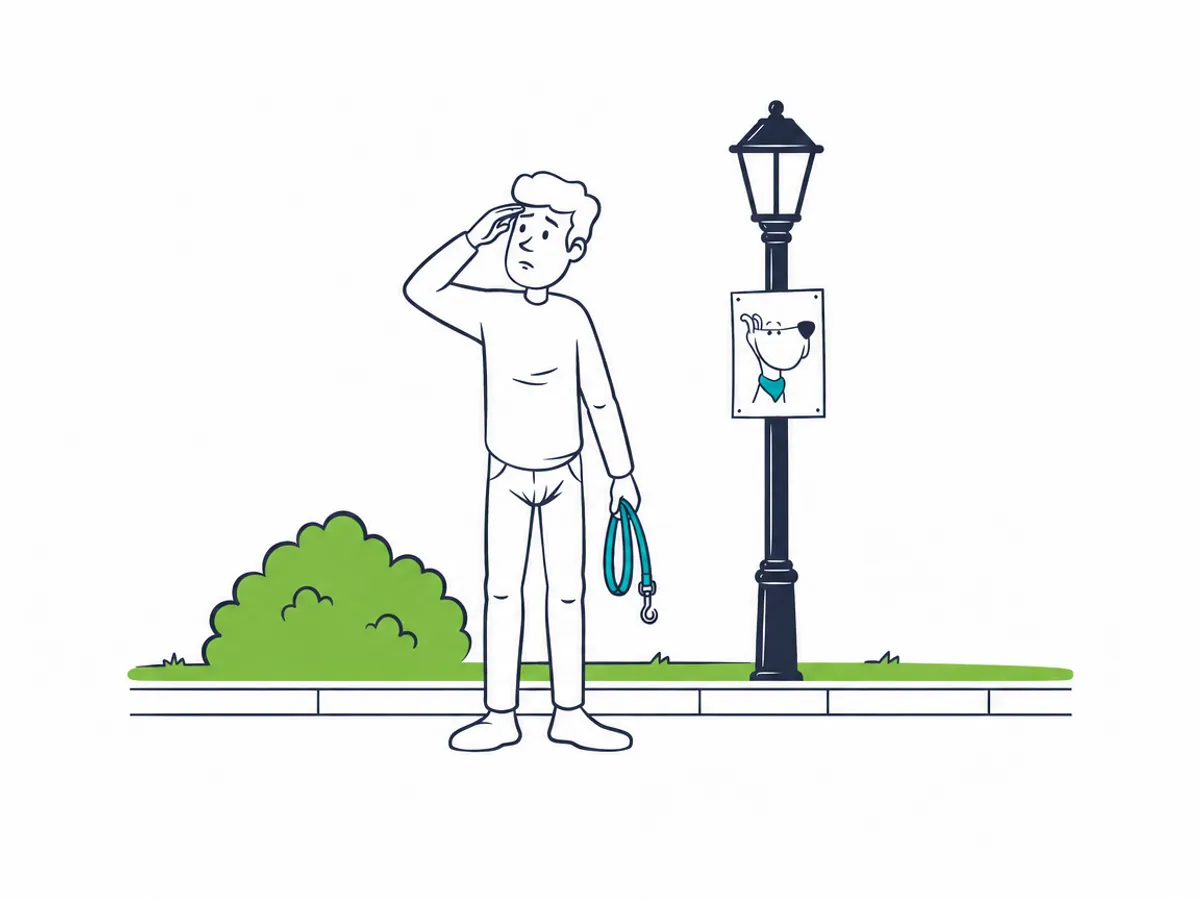
If your dog is lost, start searching calmly where you lost them, report the loss to the authorities (in Spain, within 48 hours) and check that their microchip record has your current phone number. Then alert vets, the municipal animal collection service and local shelters, and share a notice with a recent photo. Do not wait to see whether they come home on their own.
What to do in the first hour
To find a lost dog, start where you last saw them and follow their usual walks: if they slipped away in the park, search that park and the route home. If you think they have got out of the house, check every corner indoors first: a small or frightened dog may be hiding without you noticing.
- Call them in a calm voice, using words they recognise. Take a lead, treats or their favourite toy.
- If you spot them, do not run towards them: crouch down, speak softly and let them come to you.
- Show a photo to neighbours, shopkeepers and dog walkers, and ask them to check garages and storerooms in case your dog is shut in.
- Leave someone at home with a phone to hand in case your dog comes back or someone calls.
Report the loss within 48 hours
Reporting a lost dog is not optional in Spain. Ley 7/2023, the national animal welfare law, requires owners to report the loss or theft of an animal to the competent authority within 48 hours of it happening (Article 24.2 g). Do not wait until the deadline: do it the same day, even while you keep searching. Outside Spain, check the local rules with your council, the police or your vet.
Who do you report it to?
The procedure varies between autonomous communities and municipalities. Start with your town hall (ayuntamiento) or the local police (Policía Local) and ask whether you also need to declare it in the identification register. In Zaragoza, for example, the town hall says a vet should declare the dog missing in the Aragon register and that the police should also be told. Keep any proof, or note the date, time and who you spoke to. If you think your dog has been stolen, report it: the 48-hour rule covers theft too.
Why does reporting it on time matter?
Under the law, an animal counts as “lost” (extraviado) when its owner has reported the loss in the established manner and time frame (Article 3 g). If it is not reported, a dog wandering without supervision fits the definition of an “abandoned” animal (Article 3 e). Reporting on time leaves a record that you are looking for them.
Check your dog’s microchip details
In Spain, dogs, cats and ferrets must be identified with a microchip, implanted by an authorised vet, and listed in the companion animal register of their autonomous community (Article 51). But the chip only helps if your contact details are up to date. Ask your vet to check them today, especially if you have changed your phone number or address. There is more in our guide to microchips for dogs and cats.
Call vets, the municipal service and shelters
Town halls must collect lost and abandoned animals and have a 24-hour emergency collection and veterinary care service (Article 22). Ask which service or animal protection centre covers your area, and call those in nearby towns too: a dog may wander further than you expect.
Contact nearby vets, in case someone has taken your dog in injured or to have their chip read, and the local animal shelters. If you can, drop in with a photo and ask again every few days.
Post a notice with a photo and the area
A good lost dog notice includes a recent, clear photo, your dog’s name, the area, the date they went missing and how to contact you. “Toby, medium-sized black crossbreed, lost on Tuesday afternoon near the market” is more useful than “my dog is lost”. Mention a visible feature, but keep back one detail that is not in the photo, such as a scar, to check who really has your dog. There is no need to publish your exact address; the area is enough.
Put up posters in shops, vets and local noticeboards, with permission. In our guide to lost and found pets we explain how Lost and found on Miwuki Pet Shelter works: free notices with the approximate area on a map, area alerts and private chat.
Share the notice and check “found” posts
Share it in neighbourhood groups, on social media and on lost dog pages for your province. Check notices of found animals every day. If your town hall publishes the animals it collects, look there too: Zaragoza’s, for example, has a lost animals section on its website. Look at the photos carefully: dirty, scared or without a collar, your dog may be harder to recognise.
Be wary of anyone asking for money
Spain’s National Police (Policía Nacional) has warned of a scam targeting owners of lost pets: fraudsters use the poster photo to create AI images and ask for money before returning the animal. Its advice is simple: if someone asks you for money to give your animal back, be suspicious. Ask about the detail that is not in the photo, do not pay anything upfront and, if you suspect a scam, report it with the messages and the phone number. If you arrange to collect your dog, meet somewhere busy and take someone with you.
When your dog turns up
Check that they are all right and, if they are injured, limping or exhausted, take them to the vet. Then tell everyone you alerted: the town hall or police, the register (through your vet, if you declared your dog missing), vets and shelters. Take down the posters and close your notices; if you posted a notice on Miwuki Pet Shelter’s Lost and found, mark it as “Turned up”.
If your dog is at a collection centre, collect them as soon as possible and take their documents (Zaragoza, for example, asks for their pet passport or health record). The law also treats as abandoned any animal that its owner fails to collect from a collection centre within the established period (Article 3 e).
How to stop it happening again
The law requires owners to supervise their animals properly and prevent them from escaping (Article 24.2 c). In practice:
- Keep their microchip details up to date and add a tag with your phone number.
- Check the fit of their harness and collar, and use a lead near traffic or in noisy places.
- Prepare for fireworks, as a frightened dog may try to escape. We explain how in what to do if your dog is scared of fireworks.
- On trips, do not open the car door until their lead is on. Read up on travelling safely by car with your dog.
- Keep recent photos and note down their microchip number and the register it is recorded in.
Conclusion
If your dog is lost, act on three fronts at once: a calm local search, a prompt report to the authorities (within 48 hours in Spain) and a notice with a photo. Keep their chip details up to date, do not pay anyone without proof and, once they are home, close every notice.
Sources
- BOE: Ley 7/2023 on the protection of animal rights and welfare (consolidated text, in Spanish).
- Zaragoza City Council: collection of dogs, cats and other domestic animals (in Spanish).
- Battersea: what to do if you have lost a dog.
- El Español: Spain's National Police warns about the lost pet scam (in Spanish).