My dog won't eat: causes and when to call the vet
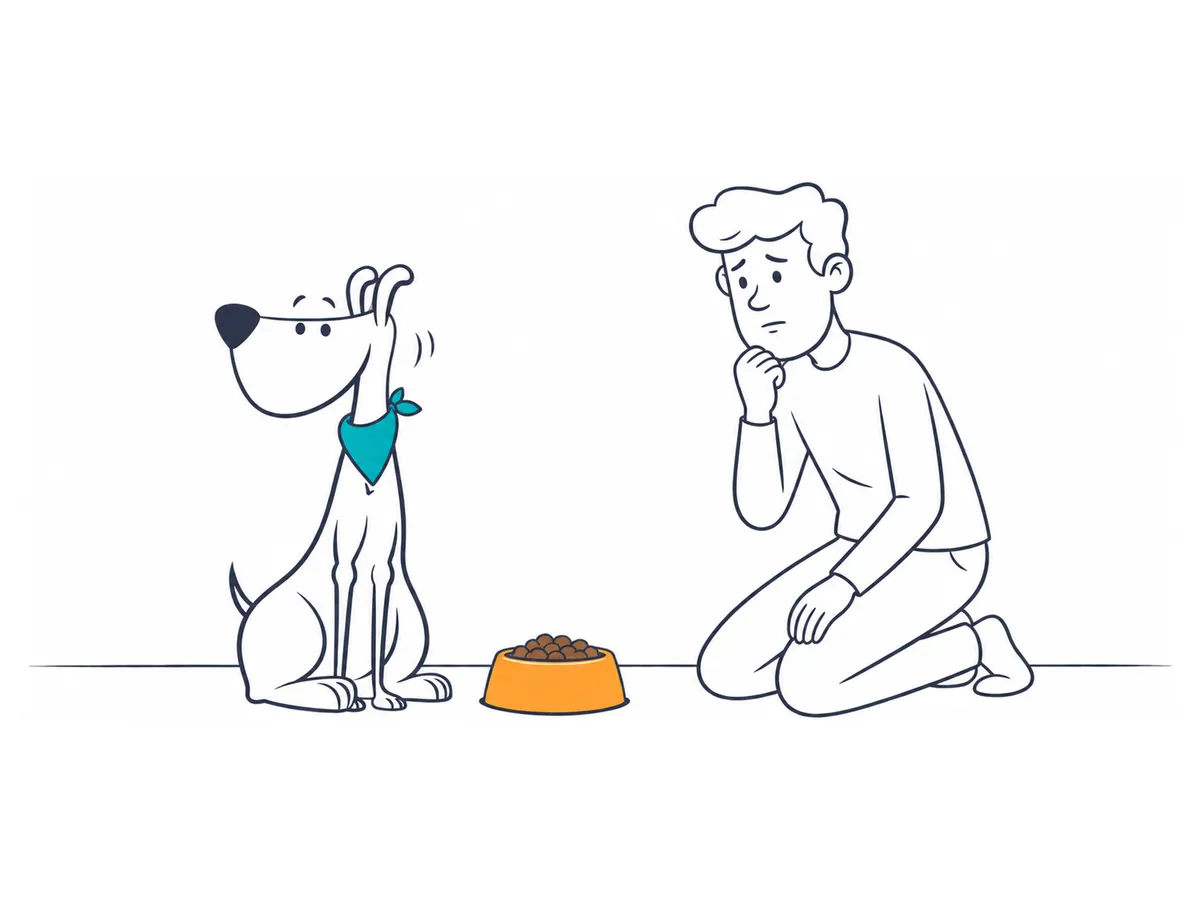
If your dog will not eat, first check whether they are refusing every type of food or only their usual kibble, and look at how they feel overall. A change in appetite is a symptom, not a diagnosis: heat, stress or a disrupted routine can play a part, but so can pain, nausea, dental disease, a swallowed object or a wider illness. If your dog is lethargic, keeps vomiting, has a swollen abdomen, seems painful or cannot drink, contact a vet without waiting.
Why is my dog not eating?
There is no single explanation. Sometimes a dog has eaten treats, table scraps or a larger portion than anyone realised and simply is not hungry at mealtime. Others refuse a new food, feel unsettled after travel, react to hot weather or lose interest when their routine changes. These situations can explain a brief episode in an adult dog who remains bright and behaves normally in every other way.
A medical problem is also possible. Pain in the mouth, nausea, fever, pain elsewhere in the body, digestive disorders, some internal diseases and certain medicines can all reduce appetite. Loss of appetite alone cannot identify the cause; its duration, how different it is from your dog’s normal pattern and any accompanying signs matter.
Do not label the behaviour as fussiness straight away. A dog who walks to the bowl, tries to pick up food and drops it is telling a different story from one who has no interest in approaching.
Is your dog not hungry, or do they want to eat but cannot?
This distinction is useful to a vet. With true loss of appetite, the dog shows little or no interest in food. With pseudo-anorexia, the dog appears hungry but something prevents them from picking up, chewing or swallowing food normally.
Watch without forcing them:
- Do they approach the bowl, sniff and walk away?
- Do they try to eat but drop pieces of food?
- Do they chew on one side, whimper or rub their muzzle?
- Are they drooling more, do they have sudden bad breath or resist opening their mouth?
- Do they keep swallowing, cough or gag when they try to eat?
These signs can point towards dental pain, an injury, inflammation in the mouth or throat, or trouble swallowing. Do not put your hand into the mouth or pull at an object unless it is completely loose and easy to reach: a dog in pain may bite, and tugging on embedded string or another object can cause further injury.
When is a dog not eating an emergency?
Seek urgent veterinary care if food refusal occurs with any of these signs:
- repeated attempts to vomit without bringing anything up, a swollen abdomen or intense restlessness;
- breathing difficulty, collapse, severe weakness, or very pale or blue gums;
- obvious pain, a hunched posture, a tense abdomen or inability to settle;
- repeated vomiting, blood in vomit or stool, or severe diarrhoea;
- inability to drink or keep water down;
- strong tremors, disorientation, seizures or loss of balance;
- possible exposure to poison, human medicine, a toxic plant or a swallowed object;
- trouble swallowing, choking or an object visibly stuck.
Unproductive retching with a distended abdomen may be gastric dilatation-volvulus, an emergency that cannot wait. If poisoning is possible, do not induce vomiting yourself. Call a clinic and explain what your dog may have swallowed, how much and when. Our guide to toxic foods and substances for dogs and cats can help you gather the details, but it does not replace that call.
Puppies, very small dogs, senior dogs and those with an existing condition can deteriorate sooner. Ask for professional guidance from the outset instead of applying the same waiting rule to every dog. As a general reference, PDSA advises contacting a vet when eating habits change and seeking prompt care if a dog has eaten nothing for more than 24 hours; that is not a deadline to wait for when other symptoms are present.
Common causes of appetite loss in dogs
Changes in food, routine or surroundings
A new diet, poorly stored food, too many treats, hot weather, travel, noise or the absence of a familiar person can temporarily change eating behaviour. Check the food’s date and smell, work out how much your dog has actually received and ask whether anyone else has fed them.
Stress can affect appetite too, but it should not become the automatic explanation. Pain, vomiting, diarrhoea, lethargy or a persistent change still need medical causes to be considered. If the episode happens when your dog is left alone and comes with vocalising, destructive behaviour or pacing, see our guide to separation anxiety in dogs.
Pain in the mouth, teeth or while swallowing
Inflamed gums, a broken tooth, an ulcer, something lodged between the teeth, or pain in the jaw, neck or throat can leave a dog wanting to eat but unable to. Some accept soft food while refusing kibble; others chew awkwardly or drop food.
Do not assume that eating soft food rules out dental disease. Look from the outside and arrange an examination if there is pain, bleeding, swelling, drooling or new bad breath. Daily prevention should be gradual and force-free: this guide explains how to brush a dog’s teeth safely.
Nausea, pain, illness or medication
Digestive upsets are only part of the picture. Pain anywhere in the body, infections, fever, liver or kidney disease and other conditions may reduce appetite. Some treatments can also cause nausea or taste changes, but never stop prescribed medication without speaking to your vet.
If diarrhoea is present, note its appearance and frequency and check the warning signs in our guide to what to do when a dog has diarrhoea. A combination of signs is more informative than one symptom in isolation.
What can you do at home if your dog is stable?
If your dog is an adult, alert and comfortable, is drinking, is not vomiting and has no warning signs, you can make a short, structured observation:
- Measure what they actually eat. Record the amount served, what remains and every treat or scrap given that day.
- Keep fresh water available. Do not remove it to make your dog eat and do not syringe water into their mouth.
- Check the food and bowl. Look at smell, date, storage and cleanliness; avoid strongly scented detergents and unnecessary changes.
- Offer the usual food in a calm place. You can warm it slightly to release more aroma if the diet allows, without adding unfamiliar ingredients.
- Watch the whole dog. Energy, posture, breathing, vomiting, stool, urine, thirst, pain and ability to chew matter as much as the bowl.
- Call if things do not improve or you are unsure. Share age, size, previous conditions and every symptom so the clinic can advise on urgency.
You do not need to try ten different foods in one afternoon. That makes intake harder to track, can upset the digestive system and teaches some dogs that refusing the bowl produces tastier alternatives.
What should you not do to make a dog eat?
- Do not force food or syringe food or water without professional instructions; your dog could inhale it.
- Do not give human medicines, appetite stimulants or stomach remedies on your own.
- Do not offer fatty or salty foods, bones, milk or home remedies to tempt appetite.
- Do not induce vomiting unless a professional who understands the case tells you to.
- Do not change a prescribed veterinary diet or stop medication without advice.
- Do not punish, chase or hold the bowl under your dog’s nose; this adds stress without treating the cause.
A short video of the attempted meal is often more useful than repeated prompting. Record one only if doing so will not delay the care your dog needs.
Why will my dog eat treats but not kibble?
Taking treats shows that some interest in highly palatable food remains, but it does not prove that your dog is well. They may have learned to wait for something better, dislike the food, have filled up on extras or feel mildly nauseated. They may also choose softer foods because chewing hurts.
Check portions and context first. If the behaviour is new, your dog is losing weight, chewing oddly, vomiting, drinking or urinating differently, or accepting only very soft food, speak to a vet. Do not turn a possible medical issue into a battle of wills.
What information should you prepare for the vet?
A clear history can speed up assessment. Record:
- when your dog last ate normally and how much they have consumed since;
- usual food, recent changes, treats, scraps and possible access to rubbish;
- water and urine: whether either has increased or decreased, or fluids cannot be kept down;
- vomiting, diarrhoea, stool changes, retching, drooling, coughing or trouble swallowing;
- energy, pain, posture, ambient temperature and routine changes;
- medicines, supplements and known health conditions;
- possible access to plants, chemicals, toys, fabric, bones or other objects.
Photographs of vomit or stool, a video at the bowl and the packaging of a suspected product can help. To keep an everyday record of meals, medication and symptoms, you can use Miwuki Pet Life. If you want to plan for unexpected veterinary costs, review the terms and cover provided by Miwuki Veterinary Insurance; never delay urgent care while checking a policy.
How can you reduce avoidable episodes in future?
Keep feeding times reasonably consistent, measure the whole daily ration — including treats — and store food in a well-sealed container. Introduce diet changes gradually unless your vet advises otherwise. A dental-care routine, suitable exercise and regular check-ups can uncover problems before appetite becomes the first visible warning.
In a multi-person household, agree on who feeds the dog. A simple record prevents three “just one treat” moments from replacing a full meal. If several pets live together, feed them separately so you know how much each one eats and reduce pressure around the bowl.
In summary
If your dog will not eat, confirm what they have refused, assess their overall condition and avoid forcing food or giving medicine yourself. A single missed meal may relate to routine, heat or too many treats, but dental pain, nausea, a swallowed object or illness are also possible. The accompanying signs and the change from your dog’s usual behaviour determine urgency. Unproductive retching, a swollen abdomen, breathing difficulty, collapse, severe pain, poisoning or inability to drink require immediate veterinary attention.