How to brush your dog's teeth: a step-by-step guide
To clean a dog’s teeth, use a soft brush and toothpaste formulated for dogs, lift the lip and brush the outer tooth surfaces with short strokes. Daily brushing is the goal, but first build acceptance gradually: if your dog seems painful, frightened or tries to move away, stop and ask your veterinarian for advice.
How to clean a dog’s teeth safely
At-home brushing aims to remove soft plaque before it hardens. You do not need to hold your dog’s mouth open or reach every tooth on day one. A short, calm and voluntary session is far more useful than a complete brushing achieved by force.
If your dog has just arrived home, let trust develop first and introduce oral care gradually. Our checklist for adopting a dog or cat can help you organise those first health checks and routines.
What you need to brush your dog’s teeth
Set everything out before calling your dog:
- Dog toothpaste. It is designed with the expectation that a dog will swallow small amounts during brushing.
- A soft-bristled brush. The head should suit the size of the mouth; veterinary dental gauze or a dental wipe can help during the introduction.
- A reward your dog values. This might be food, play or affection, depending on what genuinely motivates them.
- A quiet, well-lit place. You will be able to see the gumline without holding your dog tightly.
Do not use human toothpaste. Its ingredients and concentrations are not formulated to be swallowed by dogs.
How to get your dog used to a toothbrush step by step
Move on only when the previous step feels comfortable. Some dogs progress within days, while others need longer; there is no timetable that suits every dog.
1. Choose a calm moment
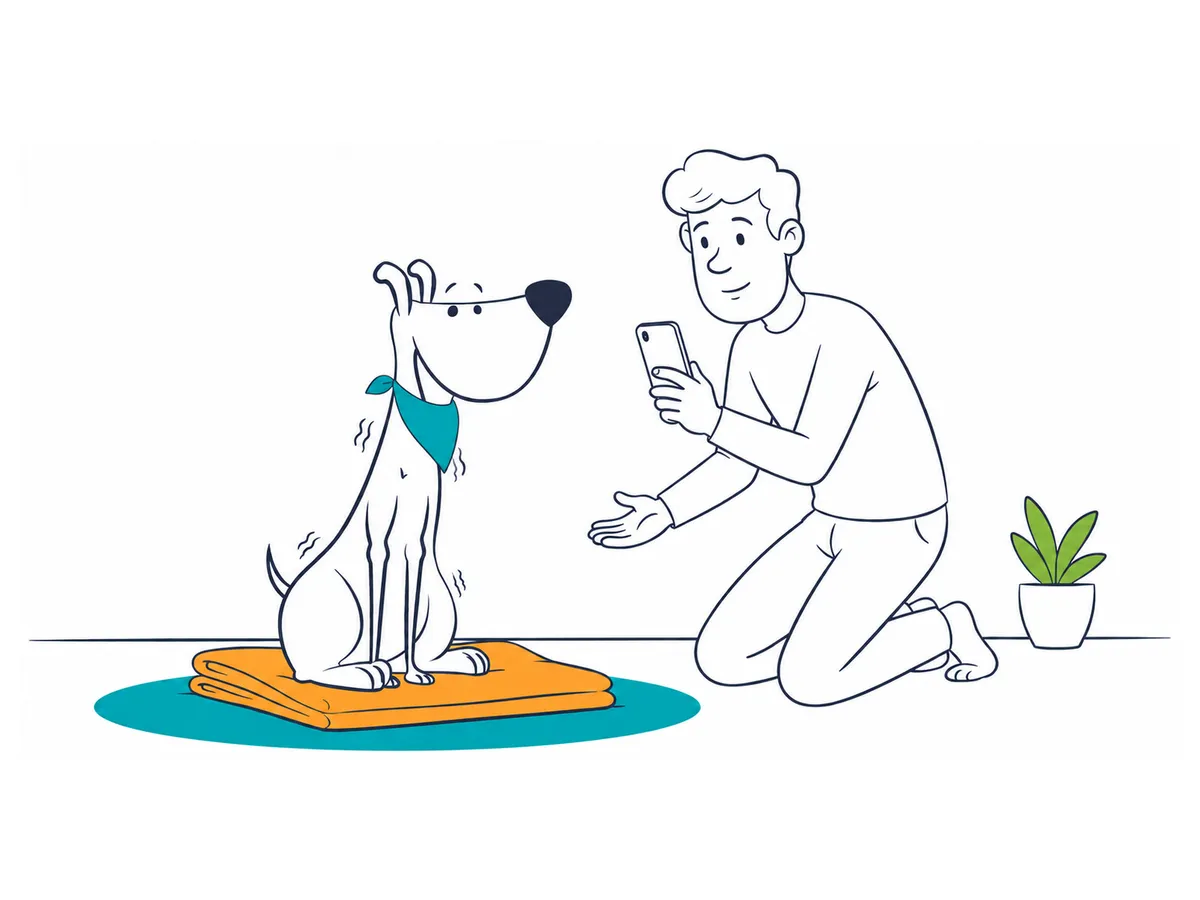
Begin after a gentle walk or when your dog is relaxed. If they are excited, overtired, eating or guarding an object, try another time. Sit beside your dog instead of leaning over them.
2. Practise touching the muzzle
Stroke the cheek, lift the lip for one second and reward. Repeat without opening the jaw. Once your dog accepts that contact, gently run a clean finger over the outside of the teeth and gums.
3. Introduce dog toothpaste
Let your dog smell a small amount of dog toothpaste. Do not trick them by hiding the brush or coating the whole mouth. The aim is for the product to predict a short, pleasant experience.
4. Introduce the brush without scrubbing
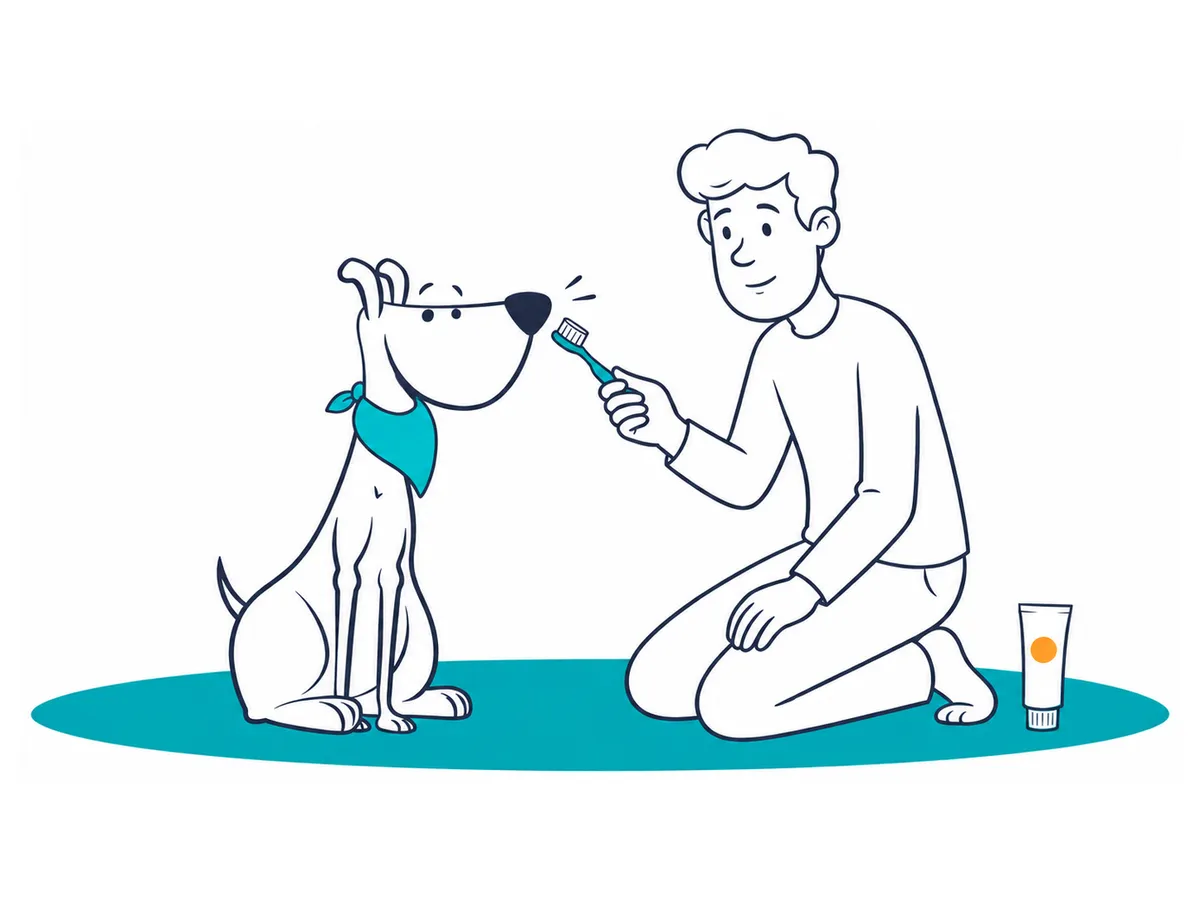
Show the toothbrush, let your dog sniff it and touch one canine tooth briefly. Reward and finish. In later sessions, add one or two teeth before increasing the duration.
5. Brush the outer surfaces
Lift the lip and place the brush where the tooth meets the gum. Use short, gentle strokes without pressing. Prioritise the outer surfaces of the canine teeth, premolars and molars: they are usually accessible without opening the mouth and are the most practical focus for a sustainable home routine.
6. Finish before your dog wants to escape
A few seconds is enough at first. Release the lip, give the reward and put the equipment away. Gradually work towards covering both sides, but stop if you see stiffness, repeated head turns, growling, pain or bleeding.
How often should you brush a dog’s teeth?
Daily brushing is the recommended goal. Plaque begins to build up again quickly, so consistency matters more than an occasional long session. If you cannot cover the whole mouth today, brushing one area well and continuing another day is preferable to turning the routine into a struggle.
Your veterinarian can tailor the frequency and technique to your dog’s age, size, mouth shape, gum health and previous treatment. Puppies can learn to accept handling early, but an adult dog can also begin with patient conditioning.
What if your dog will not let you brush their teeth?
Return to the last step your dog accepted without tension. For several days, you might only show the brush, touch the lip or use veterinary dental gauze. Keep sessions very short and reward calm behaviour; gripping the muzzle, scolding or chasing your dog usually increases avoidance.
If your dog cannot tolerate handling, ask a veterinarian to rule out oral pain before trying harder. Products with evaluated dental efficacy — including some diets, chews, gels, water additives or wipes — may complement the plan, but they do not all work equally and they do not replace an examination. The Veterinary Oral Health Council’s accepted product list shows which products have earned its seal for plaque, tartar or both.
Can brushing remove tartar that is already there?
No. Brushing helps control soft plaque, but it cannot safely remove hardened dental calculus or clean below the gumline. If you can see yellow or brown deposits, inflamed gums or persistent bad breath, your dog needs a veterinary examination to determine the appropriate treatment.
Do not try to scrape tartar at home with metal tools. You could injure the gum, damage enamel, fracture a tooth or leave disease below the gumline untreated.
Dental products and home remedies to avoid
- Human toothpaste: it is not designed to be swallowed by dogs.
- Baking soda, hydrogen peroxide, lemon or homemade mixtures: these do not replace veterinary toothpaste and may irritate the mouth or stomach.
- Very hard objects: antlers, stones, extremely hard bones and other objects that do not yield can fracture teeth.
- At-home scalers: removing only what you can see does not address disease below the gumline.
- Human painkillers or antibiotics: never give them without veterinary direction.
If your dog has swallowed a questionable product, keep the packaging and call a clinic. You can also check our guide to dangerous foods and substances for dogs and cats so you have the information the clinic will need.
Signs your dog needs a veterinary dental examination
Arrange an appointment if you notice:
- persistent bad breath or a sudden change in odour;
- red, swollen, receding or bleeding gums;
- visible tartar or loose, broken or discoloured teeth;
- drooling, pain when the muzzle is touched or reluctance to have the mouth approached;
- difficulty chewing, dropped food, chewing on one side or loss of appetite;
- facial swelling, nasal discharge or swelling around one eye.
Seek more urgent care if your dog cannot eat or drink, has heavy bleeding, severe pain, rapidly increasing swelling or a traumatic injury. Preventive brushing should not begin on a painful mouth without professional assessment.
Common mistakes when starting dental care
- Trying to finish the whole mouth on day one. Break the learning process into small steps.
- Forcing the jaw open. You can brush the outer surfaces by lifting the lip.
- Brushing painful gums. Pain creates avoidance and may signal dental disease.
- Relying on one dental treat. A complementary product does not make brushing or check-ups unnecessary.
- Changing the method every week. A consistent cue, place and sequence make the habit easier.
- Waiting for bad breath. Prevention begins before visible signs appear.
How to make brushing a sustainable routine
Pair it with something you already do, such as the final walk or settling down for the night. Keep the brush visible but out of your dog’s reach, and note which side you covered while early sessions are still partial. This daily routine template for dogs can help you fit it in without overloading the day.
You can use Miwuki Pet Life to record the conditioning process, examinations and reminders: download Miwuki Pet Life from Google Play. If you want to plan for the cost of consultations, tests or dental treatment, first review the terms and exclusions of Miwuki Veterinary Insurance.
Conclusion
Cleaning your dog’s teeth begins well before scrubbing: first your dog learns to accept muzzle handling, then meets the toothpaste and brush, and only then builds up to a longer session. Use canine products, aim for a daily routine and do not try to remove tartar at home. If there is pain, bleeding, persistent bad breath or difficulty eating, put the brush down and arrange a veterinary examination.