Newborn puppy care: what to do in the first weeks
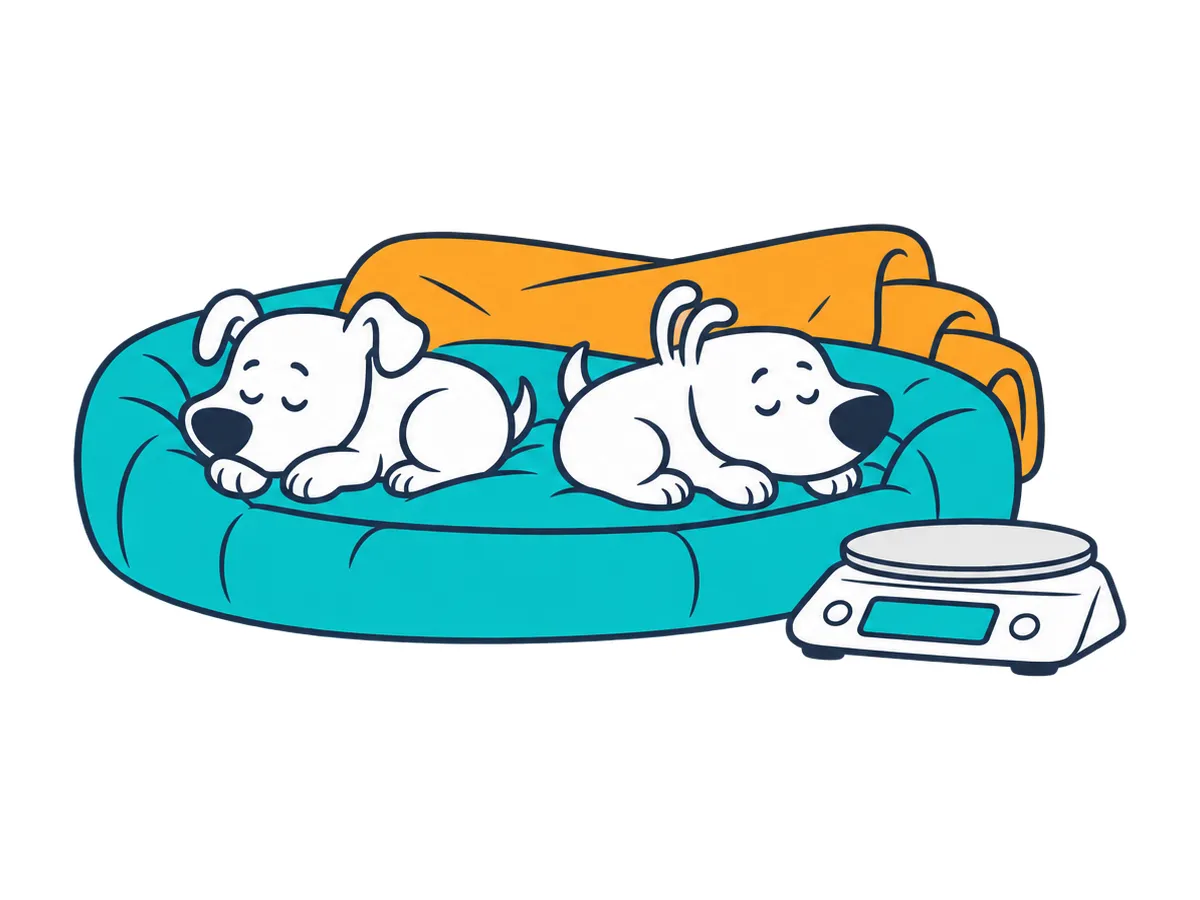
Caring for newborn puppies comes down to three things: constant warmth, regular access to colostrum and milk, and a daily check of their weight. If the mother is healthy and looking after them, your job is mainly to watch and keep the nest in good condition. If the puppies are orphaned or the mother cannot feed them, speak to your vet from day one: very young puppies can go downhill quickly.
The first weeks with their mother: warmth, colostrum and weight
During the first weeks, the mother does almost everything: she nurses, cleans and warms her litter. Even so, it is worth checking each puppy every day and writing down how they are doing. To tell them apart, note features such as markings or coat colour.
A warm, dry and quiet nest
Puppies cannot regulate their body temperature until around 4 weeks of age, according to the Merck Veterinary Manual. The environment therefore has to make up for it. As a guide, the manual gives these room temperatures:
- First week: 28.9 to 31.7 °C (84 to 89 °F).
- Second and third weeks: around 26.7 °C (80 °F).
- Fourth week: 20.6 to 23.9 °C (69 to 75 °F).
If you use an extra heat source, place it so that it cannot burn or overheat them. Newborns cannot move away from heat on their own, so check the area often. Choose a quiet corner with no draughts and out of direct sunlight, with clean blankets you can change frequently.
Colostrum in the first hours
Colostrum is the mother’s first milk, and it provides antibodies that the puppy cannot yet produce. Their gut can absorb them for only a very short time: the Merck Manual explains that this absorption usually ends around 24 hours after birth. Make sure every puppy nurses in the first few hours. If one will not latch on or stays apart from the others, call your vet that same day.
Weigh them every day
A digital kitchen scale is your best tool. Merck recommends recording each puppy’s weight daily for the first two weeks, then every three days until one month of age. A slight loss on the first day is acceptable, up to a maximum of 10% of birth weight; after that they should gain weight steadily.
For example, a puppy born at 300 g should not drop below 270 g on their first day. If they fail to gain weight or lose weight later on, seek advice.
Orphaned newborn puppies: how to feed them
If the mother is absent, rejects the litter or has no milk, the workload increases enormously. If you have never raised puppies before, ask your vet to examine them before you start and to show you the technique.
Puppy milk replacer and bottle-feeding
- Use a commercial puppy milk replacer. Merck notes that these products are better than homemade recipes, although none matches the mother’s milk.
- Follow the label to prepare the right amounts and offer it warm, at body temperature.
- Frequency: Best Friends Animal Society’s guide to orphaned puppies says that newborns need feeding every two to three hours, including at night. Feeding every two to three hours means eight to twelve feeds in 24 hours. Your vet should tailor the frequency and volume to each puppy’s age, weight, milk replacer and progress.
- Position: on their tummy with their head level, as if nursing from their mother. Never on their back.
- Hygiene: store prepared milk as the manufacturer directs; discard leftovers from each feed and do not reuse milk that has been in contact with the puppy’s mouth.
A cold puppy cannot nurse or digest properly. If a puppy feels cold, warm them up gradually and call your vet before feeding. Tube feeding should only be done by someone who has learned the technique from a vet, because a mistake can send milk into the lungs.
Helping them pee and poo
For the first two weeks, the mother licks her puppies’ genital area so that they urinate and defecate. Without her, you have to do it: gently massage that area with a warm, damp cloth or gauze until they go. According to Best Friends, puppies start doing this on their own at around two weeks.
Newborn puppy milestones, week by week
Every litter has its own pace, but these Best Friends milestones will help you know what to expect:
- Between 5 and 8 days: the ear canals open.
- Between 10 and 14 days: the eyes open. They remain sensitive to light, so keep the puppies out of direct sunlight until around 4 weeks.
- At around two weeks: they begin urinating and defecating without help.
- Third week: you can offer a dish of water and gradually introduce gruel.
Meanwhile, they move from crawling to taking their first steps. A blanket or towel on the floor gives them grip and prevents slipping. Weaning is gradual, and puppies should not be separated from their mother and littermates too early. Once they move on to solid food, this guide to how much to feed a puppy will help with portions and the number of meals.
Socialisation, deworming and vaccinations
Socialisation starts at home. Handle the puppies gently every day, let them hear normal household sounds and, when your vet thinks it is appropriate, allow calm visits. Best Friends advises that nobody who has just been around sick animals, or at a clinic or shelter, should handle them.
As for parasites, the ESCCAP guideline recommends treating puppies for roundworms from 2 weeks of age, every 14 days until 2 weeks after weaning, and then monthly until 6 months. Your vet will choose the product and dose according to each puppy’s weight. Ask about the mother too, as she can pass parasites on to the litter.
Vaccinations are planned with your vet according to age, risk and the mother’s history. You can find an overview in our puppy vaccination schedule. Best Friends considers a vet check-up during the third week a good idea.
Warning signs: when to see the vet
Newborn puppies can deteriorate within hours, so do not wait to see whether things improve. Call your vet if a puppy:
- Will not nurse, stays apart from the litter or is very listless.
- Is not gaining weight, or loses weight after the first day.
- Feels cold to the touch.
- Cries persistently or unusually.
- Has diarrhoea: call promptly, and seek emergency care if there is blood, weakness or failure to nurse.
- Vomits, regurgitates or struggles to breathe.
- Has a swollen belly or seems sore when touched there.
If the mother is lethargic, not eating or no longer caring for the litter, that also needs a vet’s attention. Bring your weight records to the appointment: they are very useful for assessing progress. This guide is for general information and cannot replace an examination or your vet’s judgement.
After the litter: spaying and responsible adoption
Raising a litter means weeks of work, vet bills and the responsibility of finding good homes. If the litter was not planned, ask your vet when to spay the mother; this guide to spaying and neutering covers the benefits, myths and aftercare.
When looking for families, choose responsible adoption: hand the puppies over with their veterinary records, get to know the adopters and do not give them to the first person who asks. And if you are the one hoping for a puppy, consider a rescue: there are always young dogs waiting for a home.
To bring an organised history to appointments, you can keep your pet’s care records and reminders in Miwuki Pet Life. Always follow your vet’s individual advice.
Conclusion
Caring for newborn puppies takes consistency and veterinary guidance: a warm nest, colostrum on time, daily weigh-ins and attention to any change. With orphans the workload is greater, and your vet should be involved from the start. If in doubt, seek advice early.