Why is my dog licking his paws? Causes and warning signs
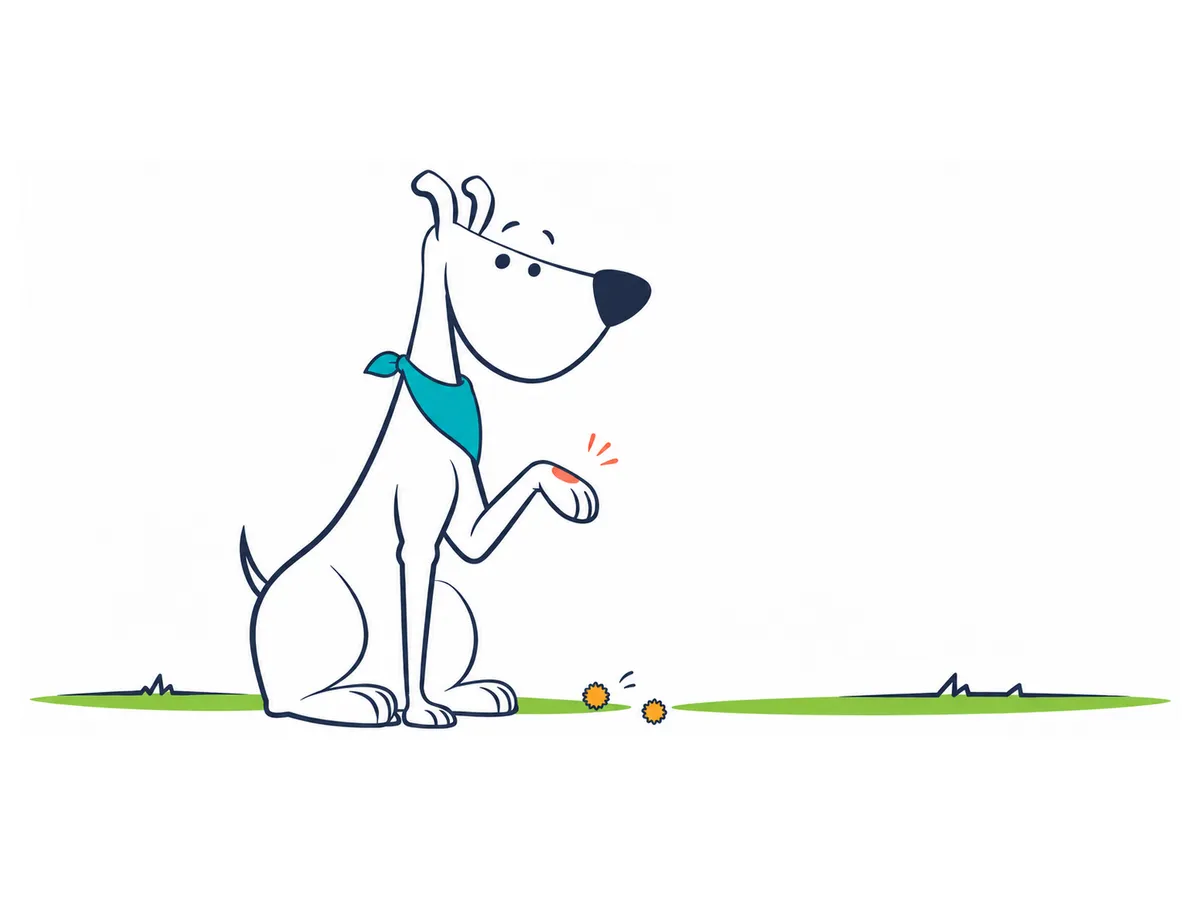
If your dog licks his paws occasionally, he may simply be grooming. If the licking is persistent, he chews at the feet, limps, or the skin is red, damp, swollen or smelly, you need to look for a cause. Repeated licking is a sign, not a diagnosis: it may result from a grass seed, a small injury, irritation, parasites, an allergy, infection, pain or, once physical causes have been ruled out, a behavioural problem. Check the paws calmly and seek veterinary advice if the licking continues or your dog is in pain.
Is it normal for a dog to lick his paws?
A brief lick after walking on wet ground or while settling down can be normal grooming. Frequency and effect change the picture: stopping play or sleep to lick, repeatedly returning to the same paw, pulling out hair or leaving the skin damp means something is bothering your dog.
The cycle can make itself worse. Saliva keeps the area moist, friction damages the skin barrier and the resulting itch prompts more licking. It is worth addressing the cause before an infection or deeper lesion develops, without telling your dog off for trying to find relief.
What should you check before considering the cause?
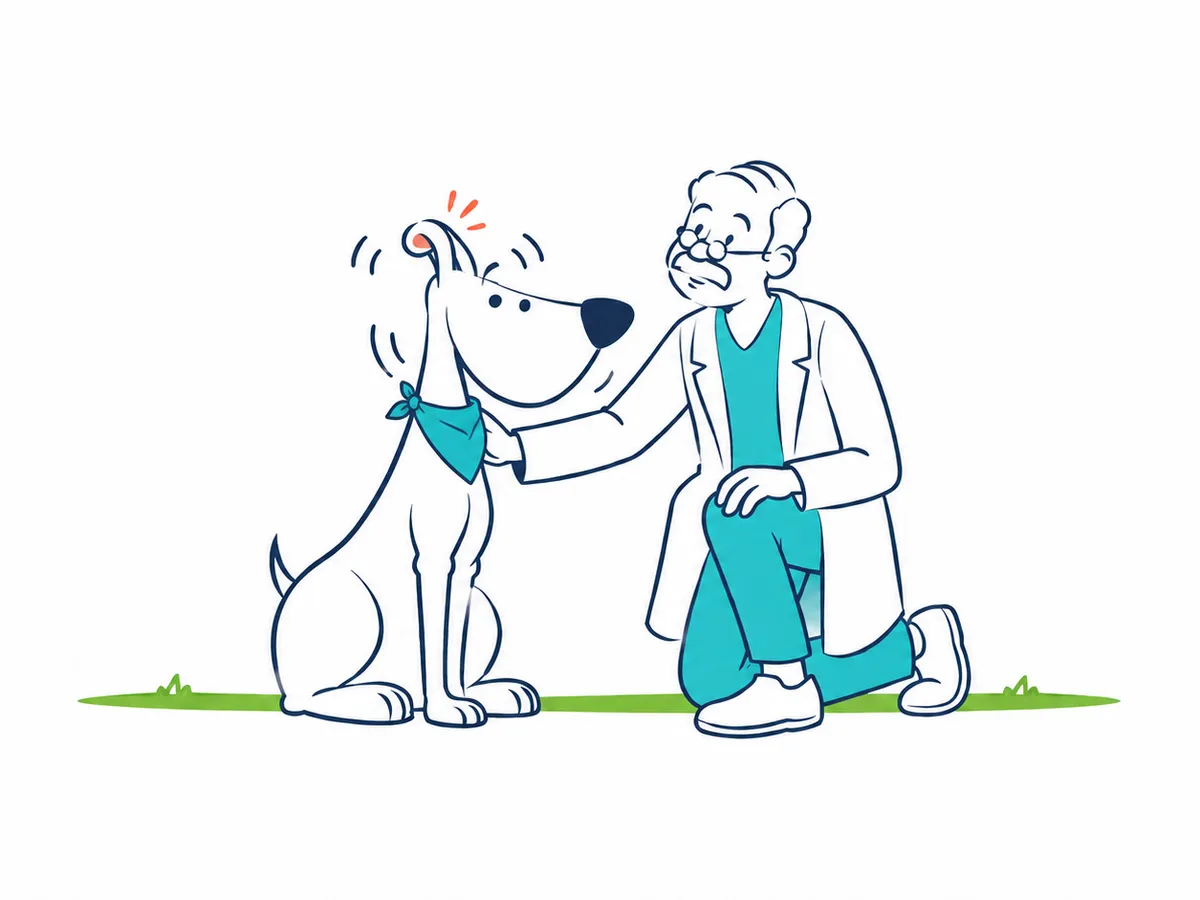
Notice when the problem began, whether it affects one paw or several, and whether it followed a walk, a change of surface or a particular season. Then, in good light and without forcing your dog, compare all four paws:
- paw pads and the spaces between the toes;
- nails, including dewclaws, and the skin around them;
- the top and underside of each paw;
- redness, moisture, hair loss, lumps, scabs or wounds;
- smell, discharge, heat, swelling or pain when bearing weight;
- small stones, seeds, plant material or surface dirt.
Stop if your dog cries, pulls away, growls or tries to bite. Even a very gentle dog may react when something hurts. Take a photograph and, if the problem comes and goes, record how your dog walks and when the licking happens: that information can be very useful at the appointment.
Common causes of paw licking
Irritation, a foreign body or a small injury
A grass seed, splinter, stone between the toes, broken nail, insect bite or grazed pad can cause sudden licking, often focused on one paw. Hot pavement, road salt, household cleaners, fertilisers and irritating plants can also inflame skin that has touched them.
If you see surface debris that rinses away, you can remove it without scraping. Do not pull at an embedded grass seed or probe a wound with tweezers: some foreign bodies penetrate farther than they appear to and may travel under the skin.
Allergies and parasites
Environmental allergies can make paws itchy and may also affect the ears, face, groin or armpits. Pollen, mites and other allergens cannot be identified just by looking at one paw; diagnosis requires the whole pattern to be assessed and other causes to be excluded. A food reaction is possible too, but switching foods at random cannot confirm it.
Fleas and other parasites can contribute to itching even when you cannot see them. Keep up the prevention recommended for your dog and read our guide to preventing fleas and ticks. Never combine parasite treatments or use a product intended for another species without professional advice.
Skin or interdigital infections
Bacteria and yeasts can multiply when skin is inflamed or damp. Redness, a strong smell, discharge, brown saliva staining, crusts or soreness between the toes warrant an examination. Lumps between the toes may also be linked to deep inflammation, infection or foreign material and should not be squeezed.
An infection can be a consequence of the original problem rather than its root cause. Treating the infection without controlling whatever keeps the skin itchy makes recurrence more likely.
Pain or repetitive behaviour
A dog may lick a paw because of pain in a nail, joint or higher up the limb, even when the skin looks normal. In older dogs, arthritis or another mobility problem may show up as persistent attention to one area and changes when getting up, climbing stairs or walking.
Boredom, stress or anxiety can also maintain repetitive licking, but these are diagnoses of exclusion: itching, infection and pain need to be ruled out first. If the behaviour mainly happens when your dog is alone and comes with vocalising, destructive behaviour or pacing, see our guide to separation anxiety in dogs and discuss it with a professional.
Does it matter whether your dog licks one paw or several?
Yes, although the pattern does not give a diagnosis by itself. One paw points more towards a local wound, damaged nail, foreign body, insect bite or pain in that limb. Several paws, particularly when the problem comes and goes or also affects the ears and other areas of skin, may fit better with contact irritation, parasites or allergic disease.
There are exceptions: an allergy can become complicated in only one paw, and an irritating surface can affect the feet unevenly. Distribution is one clue to combine with onset, season, the appearance of the skin and any other signs.
Warning signs: when should you call a vet?
Arrange same-day care if you notice obvious pain, limping, swelling, a torn nail, a deep wound, discharge, a strong unpleasant smell or a lump between the toes. You should also call promptly if licking prevents sleep, causes bleeding, worsens over hours or keeps returning despite basic care.
Seek emergency help for bleeding that does not stop with gentle pressure, a large burn, rapid facial swelling or breathing difficulty, severe pain, inability to bear weight, or a penetrating object. If chemical exposure is possible, prevent licking, rinse with plenty of lukewarm water if it is safe to do so and phone a clinic with the product name or packaging to hand.
Puppies, senior dogs and dogs with diabetes, a weakened immune system or an existing condition may need earlier assessment. When in doubt, a call to the clinic can establish the right level of urgency for your dog.
What can you do at home if the paw does not look serious?
If your dog is comfortable, walks normally and has only mild irritation with no open wound, you can provide simple care while monitoring progress:
- Rinse the paw. Use lukewarm water to remove dust, pollen or surface residue without vigorous rubbing.
- Dry it thoroughly. Pay attention to the spaces between the toes; persistent moisture encourages skin problems.
- Reduce contact with a possible irritant. Temporarily change the walking route or avoid the suspect surface.
- Prevent self-trauma safely. If your dog will not stop licking, ask the clinic to recommend a suitable barrier; a damp or tight sock can make matters worse.
- Keep a record. Note when it began, which paws are affected, walks, diet, parasite prevention and other signs.
- Ask for advice if it does not improve. Irritation that persists, recurs or spreads needs a diagnosis even if your dog remains bright.
You can use Miwuki Pet Life to keep track of symptoms, medication and check-ups. A daily photograph taken in the same light can reveal changes that are easy to miss at a glance.
What should you not put on or do to the paw?
- Do not apply human creams, essential oils, alcohol, hydrogen peroxide or concentrated disinfectants.
- Do not give antihistamines, anti-inflammatory drugs or antibiotics without a veterinary plan.
- Do not squeeze lumps or cut tissue, damaged nails or embedded foreign material.
- Do not bandage the paw tightly or leave a damp covering on for hours.
- Do not keep changing foods to “test” an allergy; an elimination diet needs planning and follow-up.
- Do not punish licking: this increases stress without removing itch or pain.
An Elizabethan collar or another barrier may prevent further damage, but it will not treat the cause and must be the right size and fit. Ask for instructions if you are unsure what to use.
What might the vet check?
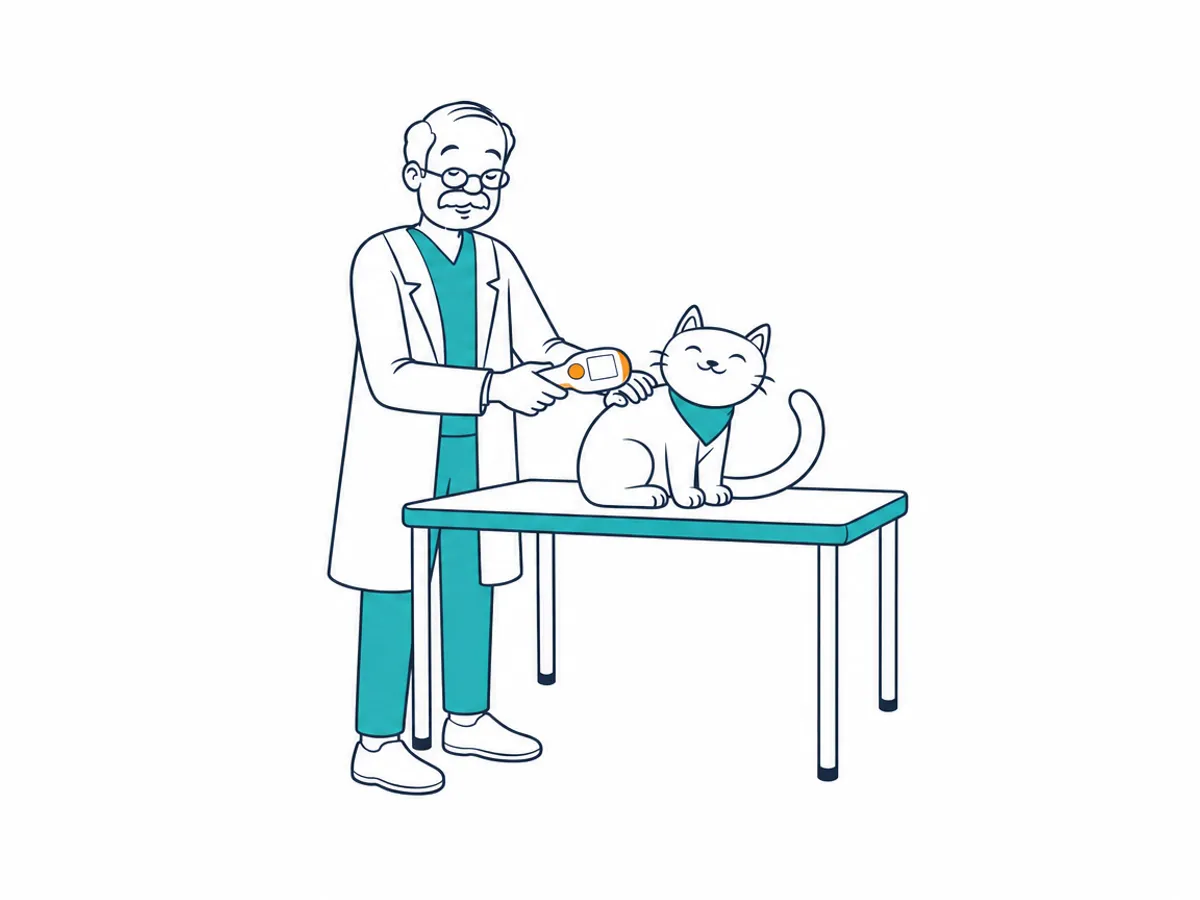
The appointment will usually begin with the history and a full examination of the skin, nails, spaces between the toes, gait and joints. Depending on the findings, the vet may look for parasites, examine skin cells under a microscope, take a sample for culture, investigate a grass seed under sedation or assess pain with imaging.
When allergy is suspected, treatable causes are ruled out and secondary infections are controlled first. Tests and diets are chosen to answer specific questions; there is no single quick test that explains every itch. Treatment may include removing a foreign body, managing a wound, controlling infection or parasites, relieving itch, treating pain and adapting the environment.
If you would like to plan for unexpected veterinary costs, review the terms and cover provided by Miwuki Veterinary Insurance. Never delay care for pain or an emergency while checking a policy.
How can you reduce the risk of it happening again?
Check your dog’s paws after walks through long grass, areas with grass seeds, snow or treated surfaces. Rinse and dry them after mud, salt or possible irritants, and keep nails at an appropriate length. Avoid hot pavement: if you cannot comfortably hold the back of your hand against the surface for a few seconds, choose a cooler route.
Keep up the parasite prevention advised by your vet and record when episodes happen. If your dog has an allergy or chronic condition, following the complete plan — including control of flare-ups and infections — is usually more useful than trying a new remedy each time. Suitable physical activity, rest and enrichment can also help when stress plays a part, always after the medical component has been addressed.
In summary
If your dog will not stop licking his paws, check how many feet are affected and look for irritation, wounds, foreign material, smell, swelling and pain, while also watching how he walks. A gentle rinse and careful drying can help with surface residue, but they do not replace diagnosis when licking persists. Limping, pain, discharge, bad smell, a deep injury or rapid deterioration require veterinary attention. Avoid medicines and creams unless advised: breaking the licking cycle depends on treating its true cause.