Lost cat: how to find a cat that has escaped
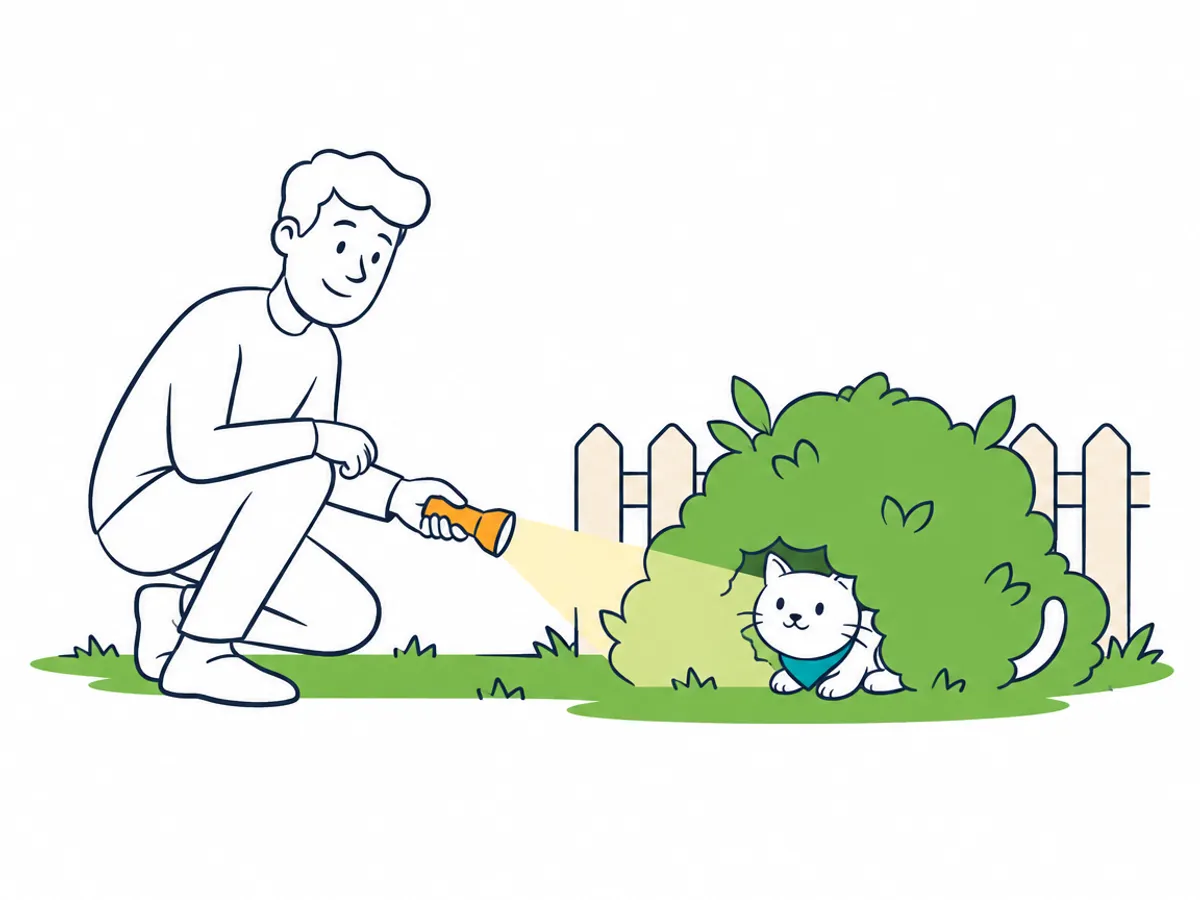
If your cat has escaped, search very close to home first: a frightened cat usually hides a short distance away and may not come out even when you call. Search your building or garden slowly, under cars and in bushes, with a torch and at quiet times. At the same time, report the loss to the authorities (in Spain, within 48 hours at most) and tell your neighbours and local vets.
Why your cat hides and stays put when you call
When you realise “my cat has escaped”, it is easy to picture them far away. But an indoor cat does not know the outside world: once out, they easily become disorientated and fear makes them hide. Many stay very close, in places you cannot see, and will not come out even while you are looking for them. So if your cat does not meow or appear, do not assume they are far away.
How far does a lost cat go? What one study found
A study published in 2018 in the journal Animals analysed 1,210 cases of missing cats using questionnaires from their owners. Among the cats found alive:
- Cats that never went outside: half were 39 metres or less from where they escaped, and three in four were within 137 metres.
- Cats allowed outside unsupervised: half were within 300 metres, but a quarter were 1.6 kilometres or more away.
The authors suggest a 200-metre search radius is probably enough for an indoor cat, while for a cat that goes outdoors the search may need to reach 2 kilometres or more. These figures are a guide (owners took part voluntarily and very few cases were from Spain), but the priority is clear: search close and thoroughly in the first week, when about a third of the cats were found alive.
Where to look for a lost cat
At home and in your building
Start at home: cupboards, behind curtains and sofas, under duvets and even inside the washing machine. In a flat, carry on through the stairwell, other floors, the garage, storerooms, the roof terrace and courtyards. Ask neighbours to check their terraces, storerooms and garages, where a cat can get shut in by accident: in the study, 11% of the cats found alive were in someone else’s home.
Outdoors and in gardens
Look under parked cars, among bushes and hedges and under porches and sheds, and ask permission to search neighbouring gardens corner by corner. In the study, many cats found outdoors were hiding under bushes, porches or cars near their home, and almost one in five was waiting by the house: check your doorstep often.
With a torch and at quiet times
Go out early in the morning and at night too, when it is quieter and your cat is more likely to be active. In the study, walking the area at night with a torch and asking neighbours for help were among the quickest ways to find a cat alive.
How to help your cat come back
- Call calmly and listen. Pause between calls. Among owners who said calling helped most, more than half reported that their cat meowed back but did not come: if you hear a meow, move slowly towards the sound.
- Use strong-smelling food or shake their treat box.
- Leave things that smell of home, such as their unwashed bedding or a worn item of your clothing, by the door.
- Make the way back easy: if it is safe, leave food just inside an open door and watch from a distance so you can close it once they are in.
- If you see your cat, do not chase them. Crouch down, speak softly and let them come to you. If your cat is very nervous, ask neighbours not to try to catch them, just to let you know.
Report the loss within 48 hours and check the microchip
In Spain, the animal welfare law (Law 7/2023) requires owners to report the loss of an animal to the competent authority within 48 hours at most (Article 24.2(g)). This is more than a formality: the law only treats an animal as “lost” (extraviado) when the loss has been reported in the proper form and time; otherwise, an animal wandering alone fits the definition of abandoned (Article 3). Ask your local council (ayuntamiento) how to do it, as the procedure varies between autonomous communities and municipalities.
Cats must be microchipped and registered in the companion animal register of their autonomous community (Article 51). If someone takes your cat to a vet, the chip will only lead back to you if your details are up to date: check them with your vet or with that register. Find out more in our guide to microchips for dogs and cats.
Who to tell
- Neighbours and delivery drivers: show them a photo and ask them to check garages, storerooms and cars, including across the street.
- Local vet clinics: in case someone brings your cat in injured or to have the chip read.
- The council’s animal collection service: local councils are responsible for collecting lost and abandoned animals, with a 24-hour emergency collection and veterinary care service (Article 22). Call every few days.
- Nearby animal shelters: ask whether a similar cat has been brought in and if they can share your notice.
Post a notice and check the “found” listings
A good notice includes a recent, clear photo, the area where your cat went missing, their most recognisable features, where they tend to hide, whether to approach them or just let you know, and your contact details. Share it in local neighbourhood groups and check “found” listings often.
Our lost and found pets guide explains how Lost and found on Miwuki Pet Shelter works: free notices showing an approximate area on a map, area alerts and private chat.
When your cat comes home
Offer water, food and a quiet room. In the study, half of the cats seemed scared when they were found and 9% were ill or injured: if you notice wounds or limping, or your cat seems unwell, take them to the vet. Then tell everyone you contacted that your cat is back and close any notices you posted.
How to stop it happening again
- Windows and balconies: sturdy screens and well-secured nets; we cover this in our guide to preparing your home for a cat.
- Doors on hectic days: visitors, house moves, building work or loud noises stress many cats and can make them bolt; on those days, keep your cat in a quiet, closed room.
- Neutering: without it, a cat may roam far in search of a mate. In Spain, the law also requires cats to be microchipped and sterilised before six months of age, except those registered as breeding cats in the name of a registered breeder (Article 26(i)). Read more about neutering dogs and cats.
- Up-to-date photos and details: keep recent photos of your cat’s face and whole body, and update the microchip register if you change your number or address.
Conclusion
To find a lost cat, search close by, early and slowly, with a torch and at quiet times. At the same time, report the loss to the authorities, check their microchip details and share a notice with a photo and the area. And when they come back, secure your windows and doors.