How to get your cat used to a carrier without forcing them
To get your cat used to a carrier, leave it open at home and reward voluntary approaches. Going inside, accepting a closed door and travelling are separate skills: move forward when your cat is comfortable, not after a fixed number of days. If they need veterinary attention today, call the clinic to arrange safe transport; training must not delay necessary care.
Before you begin: set up a place they can return to
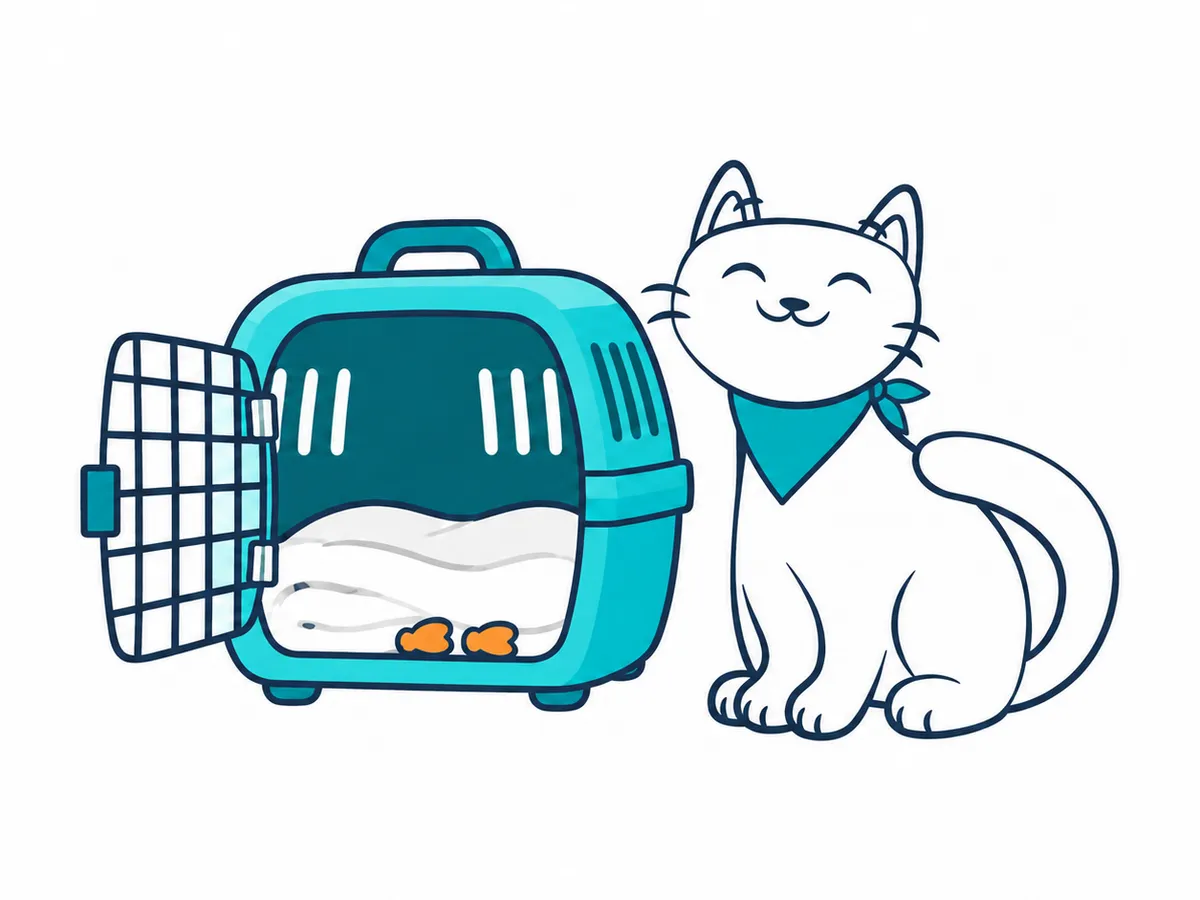
The carrier need not always signal a vet visit. Put it somewhere quiet and accessible, with the door secured so it cannot swing shut. Add familiar bedding and avoid a busy passage where other pets might corner your cat.
Check the catches and make sure your cat can settle and change position inside. A rigid carrier with a removable top makes access easier at the clinic. Keep ventilation openings clear, including when you later cover part of it with a cloth.
A gradual plan for going inside and staying there
1. Reward approaching
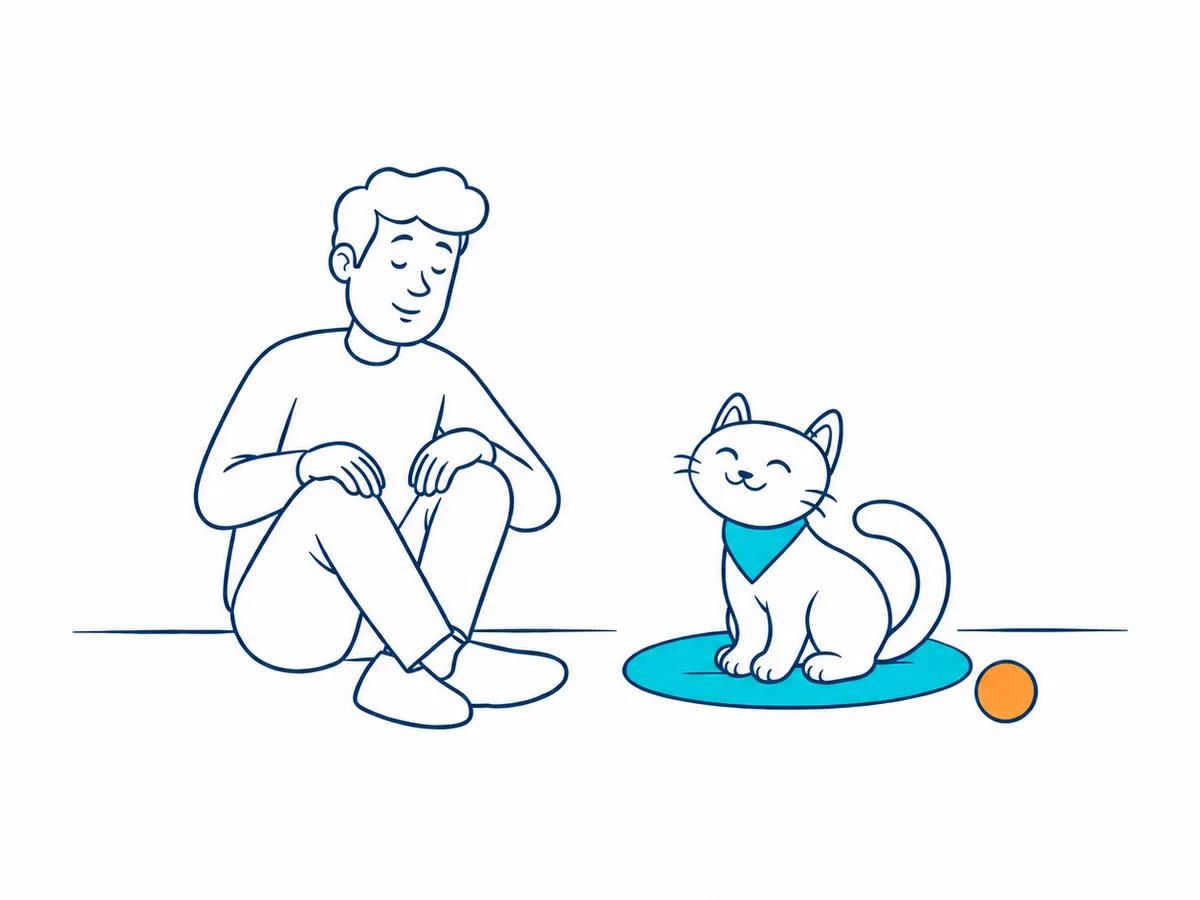
Start at a distance your cat accepts. You can leave a treat nearby and step away; looking at the carrier or sniffing it is already a starting point. Do not push from behind or block their retreat.
2. Build a voluntary entrance
Once your cat approaches calmly, offer the reward at the entrance and then slightly farther inside. Let them leave. Avoid shutting the door on their first successful entry: you want them to choose to try again.
3. Introduce the door and movement
Practise moving the door before closing it. Later, close it briefly and reopen it while your cat remains comfortable. Only then try lifting the carrier, supporting its base to reduce swinging. If fear appears, return to the last step they accepted.
The FelineVMA approach to cooperative training frames practice around voluntary participation. Ending an easy session is usually more useful than continuing until your cat escapes.
How to tell when to make things easier
Look at the whole picture: a tense body, flattened ears, attempts to flee or refusing a normally welcome reward can mean the situation is too much. Staying still does not prove that a cat feels relaxed.
For example, if your cat enters alone but leaves when you approach, practise being farther away before working on the door. Record the last comfortable step; that tells you more than a label such as “bad behaviour today”. Our guide to signs of stress in cats explains other changes to watch for.
If the appointment is today and your cat will not enter
Explain the problem to the clinic before chasing your cat around the house. The team can advise on safe handling and consider an individual plan for severe fear. Do not give sedatives or human medicines yourself.
Keep the carrier closed and stable during the journey. At the clinic, wait for staff guidance before opening it. Breathing difficulties, marked weakness or pain need veterinary attention, even when they make transport harder.
Mistakes to avoid
- Bringing out the carrier only when you are already in a hurry.
- Punishing your cat or shaking the box to make them leave.
- Increasing confinement time, movement and noise all at once.
- Assuming comfort with the carrier at home means readiness for a long journey.
If you have recently adopted, include this preparation in your plan for the first days at home. You can also explore Miwuki Pet Life to support your cat’s care.
Conclusion
Getting your cat used to a carrier means building a series of manageable experiences. The aim is safer, easier transport, without promising to remove all stress. If progress stalls or travelling causes severe distress, plan the next step with your vet.