Why cats knead: what it means and when to pay attention
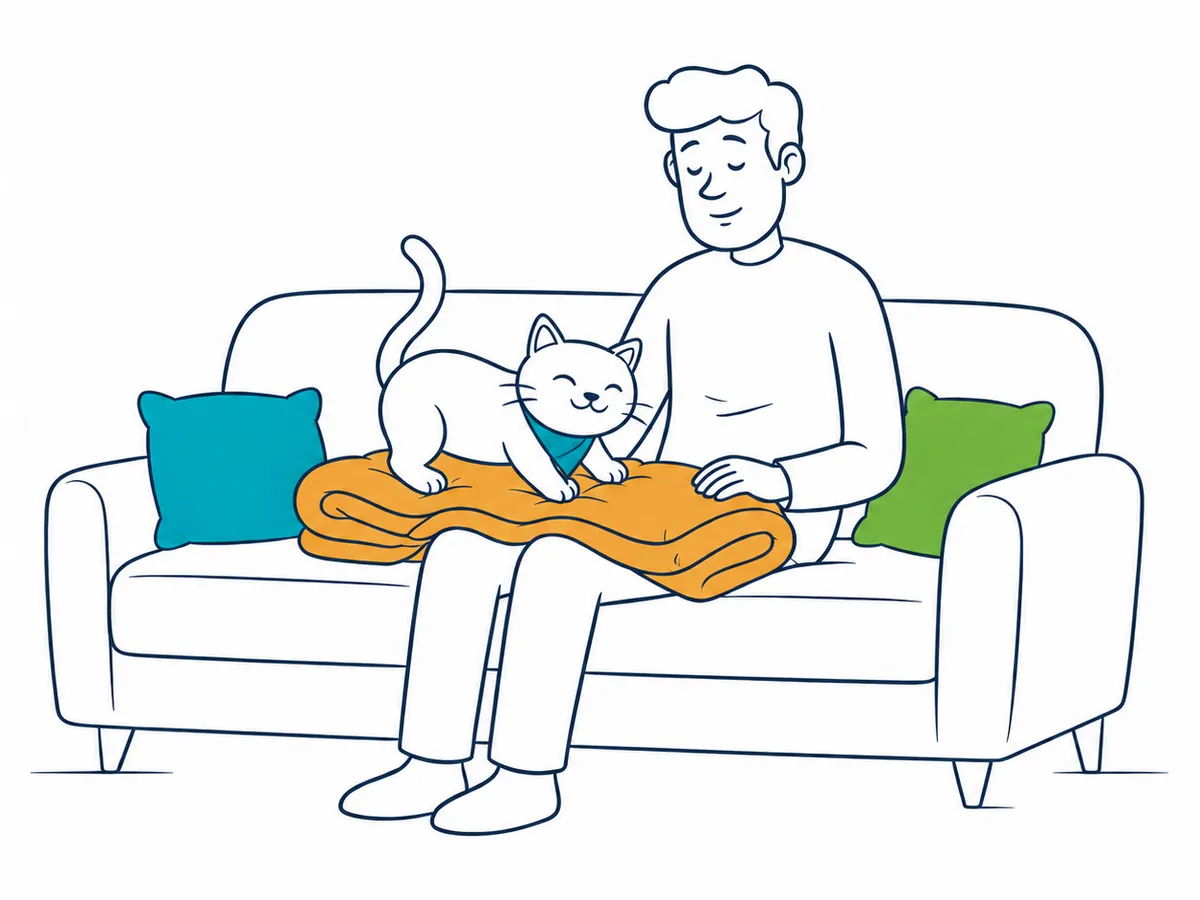
Cats knead when they rhythmically alternate their front paws against a soft surface. The behaviour begins during nursing, and many cats retain it as adults. It often appears during comfortable, restful moments, but there is no single proven explanation: you need to read it alongside the cat’s full context.
What does it mean when a cat kneads?
In a kitten, the movement has a clear purpose: they press around their mother’s teats while feeding and help stimulate milk flow. In an adult, the behaviour may return on a blanket, a bed, another animal or a person.
If your cat kneads with a loose body, neutral ears and half-closed eyes, they are probably comfortable. Kneading on you may mean your lap feels safe and pleasant, but it is not an exact test of love or a reliable way to reconstruct their past.
Why do cats keep kneading as adults?
The honest answer is that no single cause has been confirmed. These are the most reasonable interpretations:
They retain a behaviour from nursing
Kneading starts very early and becomes associated with warmth, food and contact with the mother. A soft texture may trigger that pattern again in adulthood. This is why cats often knead just before settling down or going to sleep.
It may help them settle and relax
Many cats knead when they find a plush blanket or prepare their resting spot. It can be part of a calm sequence: explore, knead, turn around and lie down. Purring may accompany it, although purring does not always mean the same thing on its own either.
Scent communication may play a role
Cats gather a great deal of information through scent and have glands in several parts of the body, including their paws. Kneading has been proposed as another way to leave chemical signals on a surface. It is a plausible hypothesis, not a literal translation of “this belongs to me.”
Sometimes it works as a self-soothing behaviour
A cat may also knead or purr to regulate themselves when something feels wrong. The surrounding signals make the difference: kneading on their usual blanket before falling asleep is not interpreted in the same way as suddenly doing it while hidden, eating less or avoiding contact.
Why does my cat knead me and purr?
Most often, they are comfortable with the texture, warmth and closeness. Look at the full picture:
- Relaxed context: loose posture, slow blinking, neutral ears and rest afterwards.
- Rising arousal: a thumping tail, rippling skin, sideways ears or a bite when touched.
- Possible discomfort: hiding, appetite changes, less play or repeated kneading in unusual places.
Respect their pauses. If they stop looking comfortable, take your hands away and allow them to leave. Reading those signals prevents a calm moment from turning into overstimulation.
Does kneading mean a cat was weaned too early?
Not necessarily. Cats raised with their mother and cats separated early may both knead as adults. Kneading alone cannot tell you when weaning happened and does not prove an emotional problem.
Pay closer attention if your cat also sucks, tears or swallows fibres from blankets or clothes. Sucking without swallowing may be a habit, but ingesting fabric creates a risk of intestinal blockage. If threads go missing or your cat vomits, becomes lethargic or stops eating, contact a vet promptly.
How to let your cat knead without hurting you
There is no need to stop a normal behaviour. You can make it more comfortable for both of you:
- Place a thick, durable blanket between their paws and your skin.
- Gently redirect them onto that blanket without raising your voice or pushing them away suddenly.
- Keep their claws in good condition with suitable scratching posts and regular checks.
- If they need an activity outlet, alternate rest with short play sessions.
- Avoid holding their paws or punishing them: they may start associating your lap with an unpleasant experience.
For safe alternatives, explore these homemade cat toy ideas. If kneading appears alongside routine changes or tension, this guide to signs of stress in cats will help you review their environment.
Common mistakes when interpreting kneading
- Assuming it always means affection. It often accompanies comfort, but it may also help a cat regulate themselves.
- Looking for one single cause. Texture, rest, early learning and context may all interact.
- Punishing the claws. The cat is not trying to scratch you; a fabric barrier and calm redirection work better.
- Ignoring a sudden change. A normal behaviour can still provide useful information when its frequency or location changes markedly.
- Confusing sucking with swallowing. If the cat ingests fibres, it is no longer just a behavioural curiosity.
When should you contact a vet?
Kneading on its own is rarely a cause for concern. Seek professional advice if it starts suddenly and intensely or appears alongside:
- loss of appetite, vomiting or lethargy;
- pain vocalisations, a hunched posture or avoidance of touch;
- compulsive grooming, sores or hair loss;
- unusual hiding or marked behavioural changes;
- chewing and swallowing fabric, wool or other materials.
Note when it happens, how long it lasts, and what occurred immediately before and after. That context is more useful than an isolated label. Miwuki Pet Life can help you log changes, appointments and care reminders: download Miwuki Pet Life from Google Play.
Conclusion
When a cat kneads, they are usually repeating an early behaviour in a setting that feels comfortable. There is no need to turn every movement into a secret message: watch their posture, the setting and any change from what is normal for them. A durable blanket, respect for their pauses and attention to warning signs let you enjoy this small ritual without myths or discomfort.