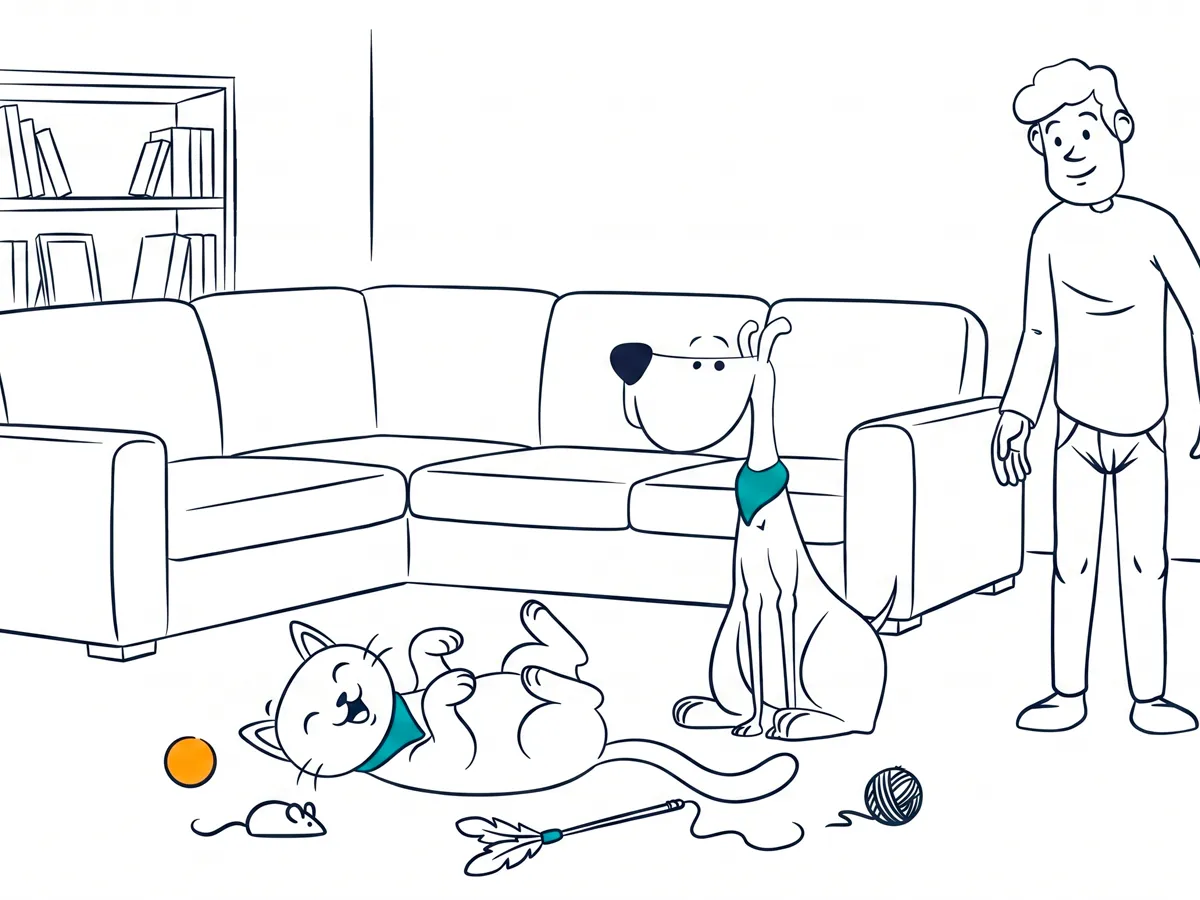
Cat scratching the sofa? Help them use a scratching post
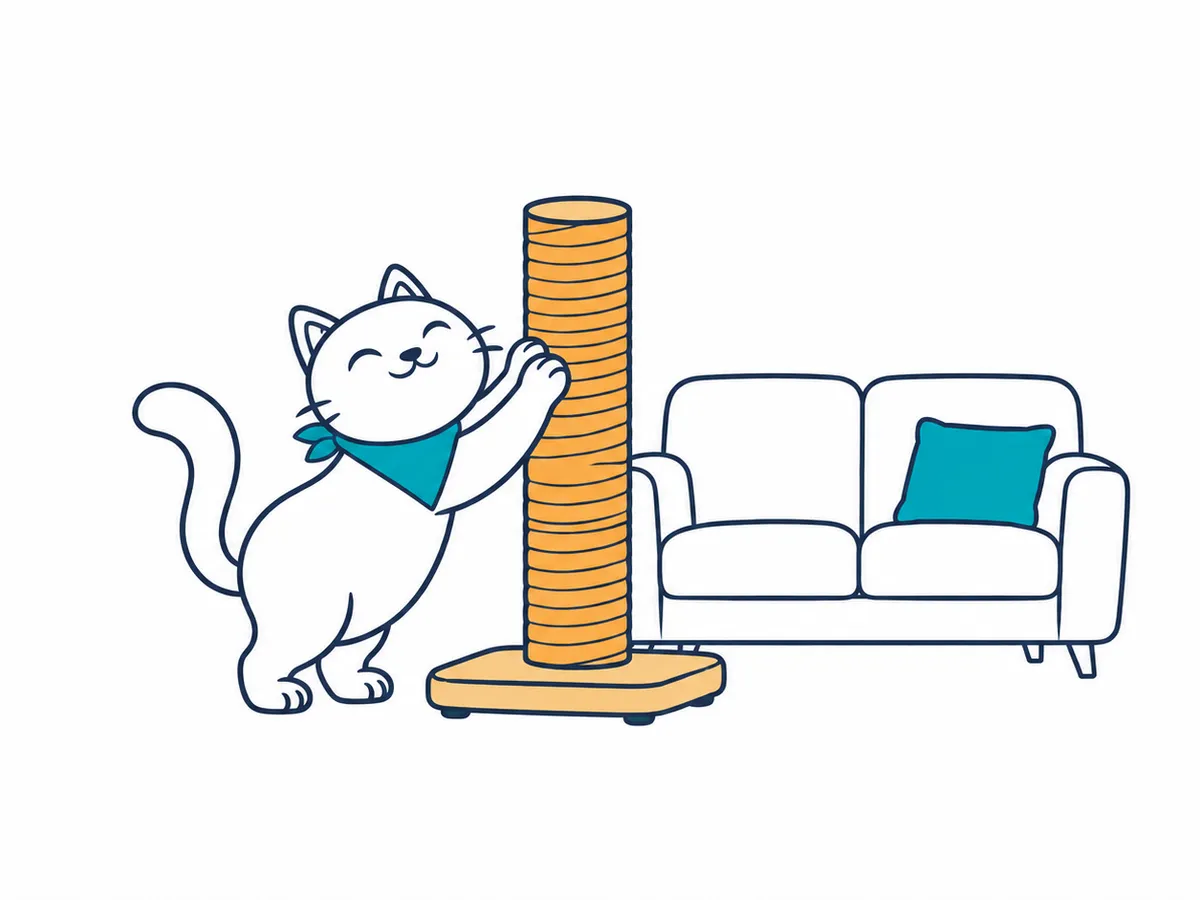
If your cat scratches the sofa, place a sturdy scratcher beside their chosen spot, match its surface and orientation to their preferences, and reward them for using it willingly. Protect the upholstery while they learn. Scratching is normal behaviour: the aim is to provide a suitable outlet, without shouting or punishment.
Why your cat scratches the sofa despite having a post
Scratching lets cats stretch, shed the outer layers of their claws and leave visual and scent signals. It does not mean they want to annoy you. A sofa may appeal because of its texture, firmness or location.
Owning a scratcher does not mean it meets your cat’s needs. If they scratch the sofa arm but their post is hidden in another room, the two options are hardly equivalent. A post that wobbles under their weight may also lose out to a solid piece of furniture.
Before buying another, observe three things: where they scratch, which material they choose and how they position their body. A photo of the spot and a short note are a useful starting point.
How to choose and position a suitable alternative
Stability and room to stretch
A vertical post should let your cat stretch and support their weight without tipping over. Check the base and any fixings against the manufacturer’s instructions. Appearance alone is not a good way to choose one.
Surface and orientation
For vertical scratching, try a firm post or panel; for a cat who prefers the carpet, offer a stable horizontal surface. Sisal and cardboard are options, but individual cats may prefer different materials. Offer choices and observe what they use instead of assuming every surface appeals equally.
A location near their chosen spot
Start beside the part of the sofa they already scratch, keeping access clear. Resting areas can also be useful locations. If you eventually need to move the scratcher, do so gradually and check that your cat continues using it.
Our guide to preparing your home for a cat helps you fit these resources around places to rest and retreat.
How to encourage scratching without forcing it
Let your cat approach and explore. When they use the scratcher voluntarily, reward them with something they enjoy, such as a small treat or calm attention if they welcome it. Do not hold their paws and drag them down the post: this can make it unpleasant.
For example, if your cat stretches after a nap and then heads for the sofa, try placing the alternative along that route. This is an example to adapt to your home, not a routine every cat should follow.
Protect the damaged area with a fitted cover that has no loose threads and does not offer an inviting surface for claws. Protection supports the scratching alternative; it does not meet the need to scratch on its own.
If your cat still chooses the sofa, check these points
- They never approach the scratcher: check whether it is beside the spot they actually use and easy to reach.
- They touch it and walk away: check for sliding, wobbling or an uncomfortable position.
- They use both: keep protecting the sofa and rewarding the alternative; one successful attempt is not a reason to remove it.
- They scratch in several places: consider offering more than one suitable location.
Record what you changed and what happened afterwards. Changing the location, material and angle together makes it harder to work out what helps. You can explore Miwuki Pet Life as a companion to your cat’s everyday care.
Mistakes that make learning harder
Avoid shouting, chasing your cat or spraying them with water. Do not expect a tiny kitten post to remain suitable as they grow, or automatically replace a well-used scratcher that is still safe: it may be their favourite.
There is no universal deadline for solving the problem. Look at how much they use the alternative and how the damage changes, without treating a setback as disobedience.
When to speak to your vet
A sudden increase in scratching alongside fear, conflict or changes in routine calls for a closer look at the environment. Our guide to signs of stress in cats explains what to observe, without assuming stress explains everything.
If your cat limps, avoids stretching, stops jumping as they used to or seems painful when moving, arrange a veterinary assessment. Physical comfort can affect which surfaces they can use. If the problem persists despite adjustments, your vet can advise on qualified behaviour support.
Conclusion
To help your cat stop scratching the sofa, start with an accessible alternative that fits their preferences. Observe, adjust and reward: protecting your furniture can go hand in hand with allowing a behaviour your cat needs.