When do cats stop growing? Growth stages and adult size

A domestic cat usually reaches much of its adult size during the first year, but cats do not all stop growing at the same age. Cats Protection places full growth at around 10-12 months; large breeds may take considerably longer. Adulthood, sexual maturity and the end of growth are different milestones: review your cat’s progress with your vet before changing their diet.
How long does it take for a cat to grow?
The Merck Veterinary Manual gives some very clear reference points for the domestic cat:
- At birth, a kitten weighs between 90 and 100 grams.
- During the first 3-4 months they grow very fast, gaining 50 to 100 grams a week.
- Growth begins to slow at around 150-160 days (about 5 months).
- It is usually complete by 200-220 days, that is, at around 7 months.
These figures should not be treated as a deadline for every cat. Cats Protection places full growth at around 10-12 months. AAHA/AAFP guidelines classify cats as kittens until one year and young adults from one to six years. Breed, sex and individual progress matter more than assuming growth ends at seven months.
Until what age do cats grow?
It mainly depends on breed and the individual. In a medium-sized mixed-breed cat, growth is usually practically complete before their first birthday. In large breeds the process takes longer: the Cat Fanciers’ Association (CFA) describes the Maine Coon as a slow-maturing breed that can take up to three years to reach full growth.
If your cat belongs to a large breed or is a cross with one, do not be surprised if they keep “filling out” after their first birthday.
The growth stages of a kitten
Every kitten has their own pace, but these are the stages worth knowing:
- Newborn (first two weeks). Born with eyes closed and ears folded. They cannot keep themselves warm or go to the toilet without help, and depend completely on their mother or carer.
- Transition and socialisation (from 2-3 weeks). They start walking, their teeth come through and weaning begins. According to the AAHA/AAFP guidelines, the sensitive socialisation period begins at around 2-3 weeks and may be closing by 9-10 weeks. What they experience in those weeks has a strong influence on how they will relate to people and other animals.
- Juvenile growth (up to about 7 months). This is the stage with the most play, the most energy and the biggest gains in size.
- End of kittenhood (up to one year). They are almost full size, but their behaviour and nutritional needs are still changing.
- Young adult (1 to 6 years). Time to settle routines and keep an eye on their weight.
How to work out a kitten’s age
If you have found a kitten or are adopting one without a known birth date, these clues, based on Alley Cat Allies’ development guide, can give you an idea:
- Eyes closed and ears folded: probably under a week old.
- Eyes starting to open: around one week. By then they have usually doubled their birth weight.
- Eyes open (blue) and first wobbly steps: about two weeks.
- Teeth coming through and walking more confidently: at around three weeks. At this age they start going to the toilet without help.
- Steady on their feet and playing with littermates: at around four weeks.
- About two pounds (close to 900 grams): at around eight weeks.
Their final eye colour may not show until two months. These are approximations: your vet can be much more precise by checking their teeth and general condition.
Weigh them to check they are growing well
Kitchen scales are your best ally during the first months. Weigh your kitten at the same time of day and write down the results. If they stop gaining weight or lose weight, contact your vet without waiting.
From kitten food to adult food
A kitten needs much more energy than an adult. The AAHA/AAFP guidelines state that at 10 weeks, their energy requirement per kilo of body weight is more than double what it is at 10 months, and that weaning onto a complete kitten food can begin between 3 and 5 weeks of age.
That is why it makes sense to feed food formulated for kittens while they grow. According to the Merck Manual, kittens are generally moved on to adult food at some point between 8 and 12 months. For large breeds, ask your vet when to switch.
When the time comes, make the change gradually. The AAHA/AAFP guidelines describe a gradual transition over 7 to 10 days, mixing in more of the new food each time.
Neutering and weight
The AAHA/AAFP guidelines point out that obesity prevention starts in kittenhood and that neutering is associated with weight gain. That is not a reason to avoid neutering, but it is a reason to review their portions with your vet after surgery and keep an eye on their shape.
If you have questions about the procedure and aftercare, our guide on spaying or neutering dogs and cats covers the benefits, the myths and post-operative care.
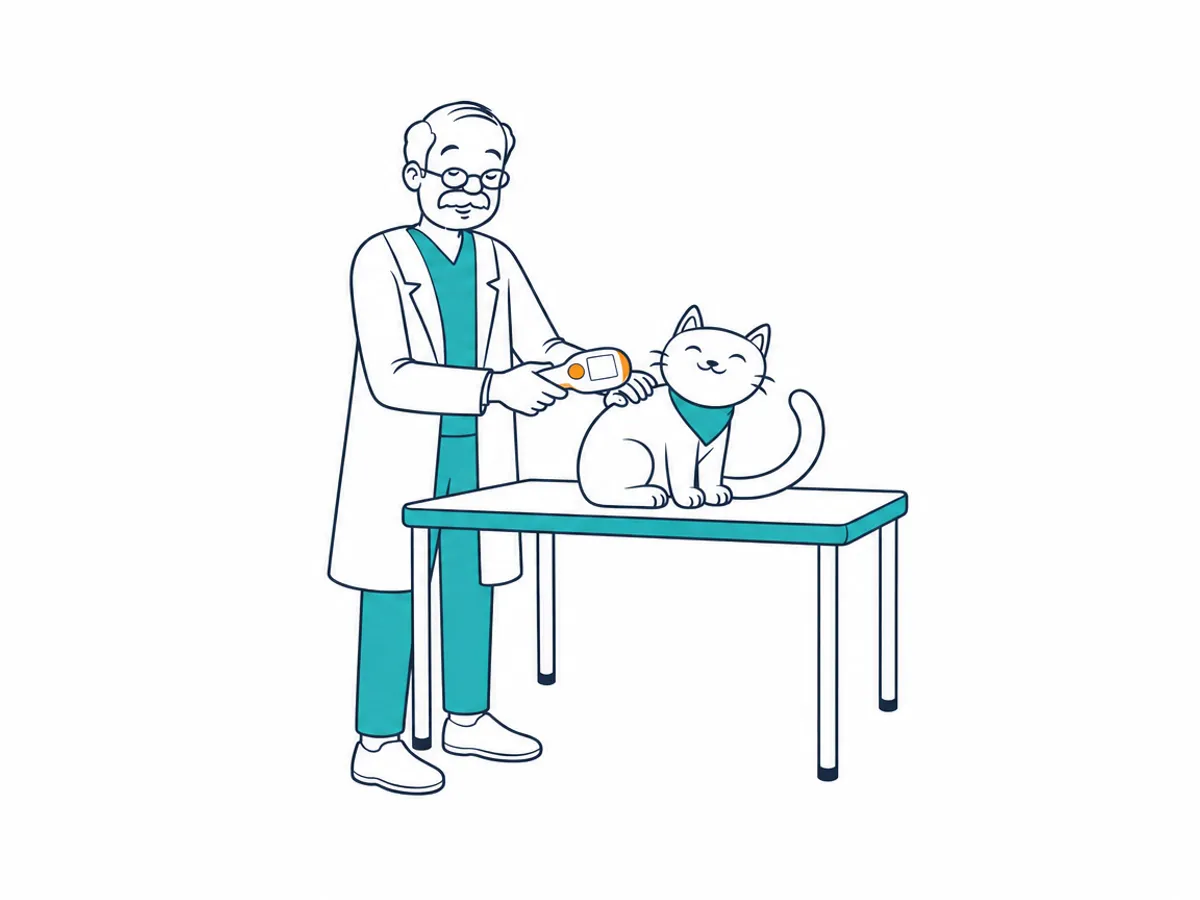
When to see a vet
Book an appointment if your kitten:
- Does not gain weight for several days or is losing weight.
- Is eating little, is lethargic or has diarrhoea or vomiting.
- Looks much smaller than their littermates.
- Has a very swollen belly or struggles to move.
This guide is for general information and does not replace an assessment by your vet, who can adapt these reference points to your cat’s breed and health.
Conclusion
Most feline growth happens during the first year and varies between individuals; large breeds such as the Maine Coon may need up to three years to finish developing. Weighing them, feeding kitten food while they grow and switching to adult food gradually are the keys. If you are thinking of adopting, at Miwuki Pet Shelter you can browse kittens for adoption (in Spanish) and ask about their approximate age.