Pet mouse care: cage, food, company and health
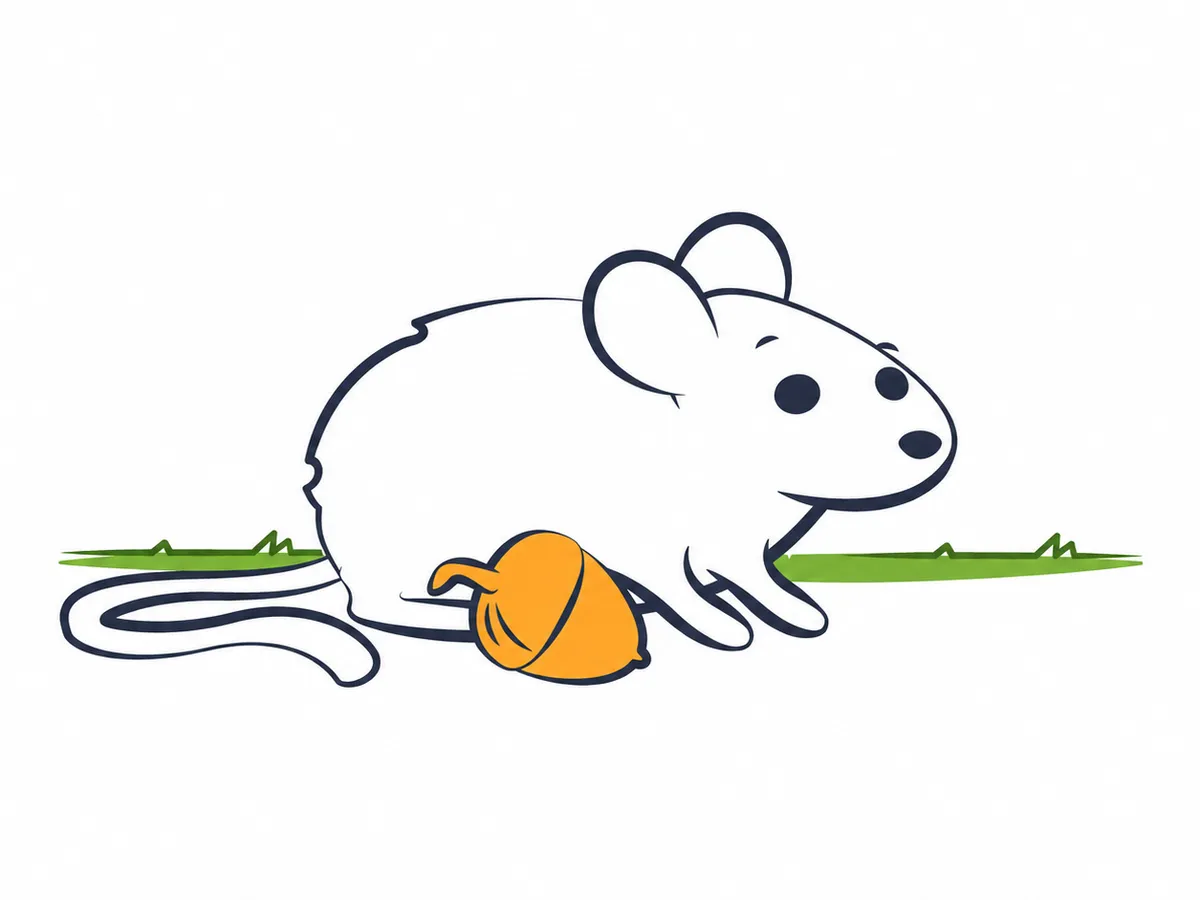
To care for a mouse properly you need to give it the company of other mice, a well-ventilated and escape-proof cage, dust-free paper bedding, a species-specific diet and daily enrichment, plus a vet who treats small mammals. It is a tiny animal, but not a toy: it has a short life, roughly one and a half to two and a half years, and every one of those weeks matters for its welfare.
What a pet mouse is like
The domestic mouse kept as a pet belongs to the same species as the common house mouse, but it has been selectively bred for generations. That is why you will see mice in many colours (brown, black, tan, grey or albino) and with smooth, curly or long coats.
Some basic facts:
- Size: 6 to 8 cm of body, not counting the tail, and around 28 grams in weight. Males are usually slightly larger.
- Life expectancy: 1.5 to 2.5 years, according to the Merck Veterinary Manual.
- Very fast breeding: pregnancy lasts about 19-21 days and litters usually have 10 to 12 young.
- Prey species: if a mouse is not used to people, being handled is very stressful for it.
That last point shapes daily contact. A pet mouse can gain confidence, but at its own pace: let it approach your hand inside the cage before trying to pick it up, and always do so over a low surface.
A mouse should never live alone
Mice are sociable and need others of their species. The RSPCA, the UK’s leading animal welfare charity, advises never housing them alone unless a vet recommends it, because isolation is very stressful for them.
Males or females?
- Groups of females: females, even unrelated ones, usually live together without problems.
- Males: they tend to fight unless they grew up together. If you keep males, it is best that they are brothers grouped from a young age and that they cannot smell females nearby, as this increases aggression.
- Mixing sexes: avoid it. With such large litters, a single slip becomes dozens of mice within a few months; if males and females are already living together, separate them and speak to your vet.
Once the group is formed, do not add or remove mice unless necessary: changes can cause fighting and stress for all of them.
A mouse’s cage: space, ventilation and bedding
The cage or tank must be well ventilated, easy to clean and escape-proof; mice can squeeze through surprisingly small gaps. Merck suggests a minimum of about 45 × 45 cm of floor space and 25 cm of height for 2 or 3 mice. More space is always better.
On bedding:
- The best option is commercial paper bedding, which is not dusty and is not dangerous if they nibble it.
- Avoid pine and cedar shavings: they contain oils that can irritate the airways. Wood shavings in general can cause blockages if swallowed.
- Add hay or shredded paper on top so they can build nests.
Remove wet bedding and food scraps daily. Adapt full cleaning to the enclosure and group size, retaining some clean, dry nesting material to preserve familiar smells, as recommended in the RSPCA guide to housing mice. Avoid repeatedly replacing everything when it is still clean; if there is an infection, follow your vet’s cleaning instructions.
Enrichment: wheels, tunnels and hiding places
A bored mouse can develop problem behaviours. Offer wheels, tubes, ladders and blocks to climb, and rotate the items from time to time. The wheel must have a smooth running surface, never bars or holes, so it cannot trap feet or tails.
What a mouse eats
The basis should be a pellet formulated for pet mice, which provides the balance of carbohydrates, fat and protein they need. You can add small amounts of fresh vegetables and, as an occasional treat, a sunflower seed or a small piece of fruit.
Practical tips:
- Measure treats: a mouse weighs around 28 grams, so what seems like “a little bit” to you is a lot for it.
- Clean water at all times, in a bottle or bowl you check every day.
- Remove uneaten fresh food so it does not spoil inside the cage.
If you have questions about amounts or a particular food, ask your vet before offering it.
Mouse health: when to see the vet
Skin and fur problems are among the most common: they can be caused by infections, mites or so-called barbering, when dominant mice chew the fur and whiskers of others because of stress or boredom. Also common are:
- Respiratory problems: sneezing, noisy breathing, difficulty breathing or nasal discharge. See your vet and ask whether isolation is needed; difficulty breathing is an emergency.
- Mammary tumours: these are common and can appear anywhere under the skin, because mammary tissue is widespread in mice. Feel your mice gently and seek advice if you notice a lump.
Other warning signs are loss of appetite, weight loss or rough, ruffled fur. If you see any of them, find a vet experienced with small mammals; in such small animals, waiting a few days can be too long. This guide does not replace a veterinary consultation.
Finally, hygiene: wash your hands before and after touching your mice or their cage, because they can pass some diseases to people, such as ringworm or salmonellosis.
Found a wild mouse or a baby mouse?
A field mouse, or a baby “pericote”, as wild mice are called in some South American countries, is not a pet. Wild animals are not adapted to living in a cage and can carry parasites and diseases.
- Do not touch it with bare hands; wear gloves and wash your hands thoroughly afterwards.
- Do not try to raise it at home on your own or put it with your pet mice.
- If it is injured or you think it needs help, call a wildlife rescue centre or your vet for guidance.
If what you find is wild mice inside your home, that is a hygiene and pest control issue, not an adoption one.
If you can no longer care for your mouse
Circumstances sometimes change. If you cannot keep looking after your mouse, never release it on the street or in the countryside: a domestic mouse would be unlikely to survive outside. With Miwuki you can give up your mouse for adoption responsibly and find it a home that understands its needs.
To bring an organised history to appointments, you can keep your pet’s care records and reminders in Miwuki Pet Life. Always follow your vet’s individual advice.
Conclusion
Caring for a mouse does not require much equipment, but it does require consistency: company of its own kind, a safe and clean cage, suitable bedding, a balanced diet and attention to any change. With that care, its short life can also be a calm and active one.