Cockatiel care guide: what it is and how to feed this bird
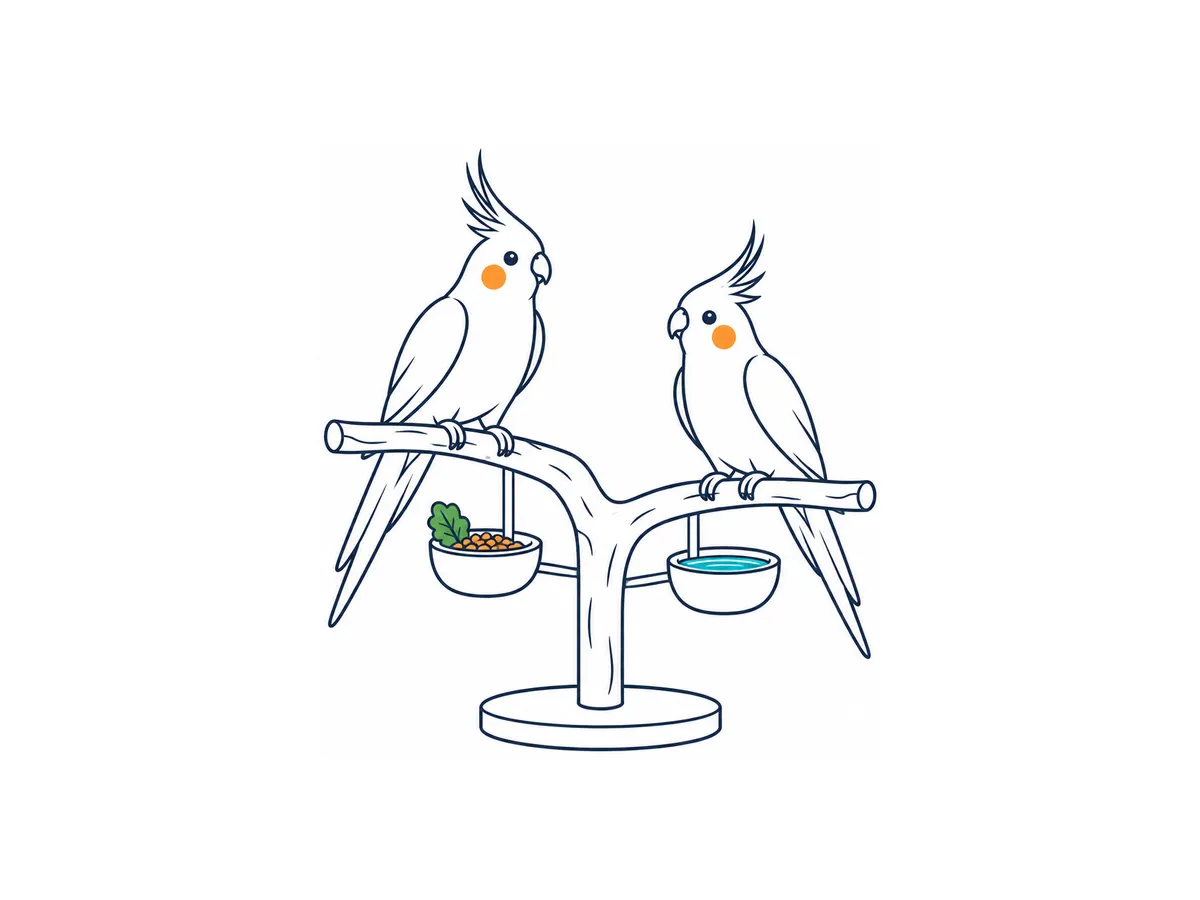
The cockatiel (Nymphicus hollandicus), known in Spain as “ninfa” or “carolina”, is a small parrot from Australia and the smallest member of the cockatoo family. It is sociable, curious and very communicative, but it needs company, daily time out of its cage and a diet based on pellets, not just seeds. Before getting one, bear in mind that it may be with you for many years.
What a cockatiel is and what it is like
The cockatiel belongs to the cockatoo family and is easy to recognise by its crest, which rises and falls with its mood, and by the cheek patches of many colour varieties. In Spain it is known as “ninfa” or “carolina”, and in English as the cockatiel.
In the wild it lives in groups, and that social instinct shows at home: it seeks contact, whistles, mimics sounds and gets bored if left alone for many hours.
How long does a cockatiel live?
It is a long commitment. AnAge, a scientific database specialising in animal longevity, records one bird that lived for 35 years in captivity. That is not typical, but it gives an idea of how long a well cared-for cockatiel can be part of your life.
Company and time out of the cage
The RSPCA, one of the UK’s leading animal welfare organisations, explains that most birds are social and do better with the company of other birds. Its guidance lists the cockatiel among the species that can live together in social groups, always in a cage or aviary with enough room to fly and to get out of each other’s way.
There are some nuances:
- Hand-reared cockatiels may prefer human company and not get on with other birds.
- Housing birds together requires a gradual introduction and watching how they interact, especially around the feeder and on high perches.
- Having a companion bird does not replace your attention: it still needs daily interaction.
As well as company, it needs to leave its cage every day in a safe room: windows closed, no other animals loose, no cables within reach and no pans on the hob.
The cage and rest
Choose the largest cage you can, one where it can spread its wings without touching the bars and with perches of different thicknesses. Place it in a quiet part of the house, away from draughts, strong midday sun and the kitchen.
Rest at night matters too. Some cockatiels are startled in the dark by a noise or a light and flap wildly inside the cage, which is known as “night frights”. To reduce the risk:
- Leave a dim light on in the room at night.
- Avoid placing the cage next to a window where car lights or shadows come in.
- Remove objects from the cage that it could hit or get tangled in.
If you see blood on a feather or wing after one of these episodes, or it seems dazed, call the vet.
Feeding a cockatiel
Diet is one of the areas where things most often go wrong. According to the RSPCA, the basis of a parrot’s diet should be complete pellets, together with fresh vegetables and fruit. For small parrots such as cockatiels, it also recommends offering some seeds every day, making up no more than a tenth of their diet.
Seed mixes as the main food are a problem: they are high in fat and low in vitamins and minerals, and the RSPCA links them to obesity, fatty liver and vitamin A and calcium deficiencies.
Ideas for its daily diet:
- Base: extruded pellets for cockatiels or small parrots, always available.
- Vegetables and fruit: washed and cut into small pieces, such as carrot, broccoli, peas or de-seeded apple.
- Seeds: in small amounts, or as a reward during training.
- Water: clean and changed daily.
Foods a cockatiel must never eat
- Avocado: the ASPCA warns that it can cause cardiovascular damage and even death in birds.
- Chocolate, coffee and other caffeinated drinks: they contain methylxanthines, which are toxic to pets.
- Salty, fatty or sugary leftovers: they add nothing to its diet.
If your cockatiel has been eating only seeds for a long time, do not change its diet overnight. Do it gradually, weigh it often to check it is not losing weight and talk to an avian vet first.
Health and visits to the avian vet
Birds tend to hide illness, so it is a good idea to find a vet with bird experience before a problem arises and to book a first check-up soon after your cockatiel arrives.
Take your cockatiel to the vet if it:
- Spends the day fluffed up, sleepy or on the cage floor.
- Stops eating or loses weight.
- Breathes with effort or bobs its tail in time with its breathing.
- Has changes in its droppings, discharge from its eyes or nostrils, or is bleeding.
Treat bleeding that will not stop, a bad fall or difficulty breathing as an emergency. This guide does not replace a veterinary consultation.
Legal origin, leg rings and the rules in Spain
Before getting a cockatiel, ask for origin and identification records. A closed leg ring alone does not prove that a bird was hand-reared or predict its character: ask how it was raised, what handling it accepts and how it interacts with other birds.
The cockatiel is not listed in the Spanish Catalogue of Invasive Alien Species in Royal Decree 630/2013, which does include, for example, the monk parakeet and the rose-ringed parakeet. Even so, Spain’s Law 7/2023 on animal welfare provides for a positive list of species that may be kept as companion animals, with a section for birds that was still awaiting approval when this guide was written. Check whether it has been published and ask your regional government what identification and requirements apply.
And if you would like to give a bird a second chance, look at the birds for adoption on Miwuki Pet Shelter (in Spanish) before buying.
To bring an organised history to appointments, you can keep your pet’s care records and reminders in Miwuki Pet Life. Always follow your vet’s individual advice.
If you are considering another species, see our comparison of small mammals and their needs: small size does not mean easy care.
Conclusion
The cockatiel is a friendly, fun bird, but not an ornament for a cage. It needs company, daily time out, a diet based on pellets and vegetables with few seeds, calm nights and a trusted avian vet. If you can offer all of that for many years, it will be a very special companion.