Axolotl: what it is, how to care for one and the law in Spain
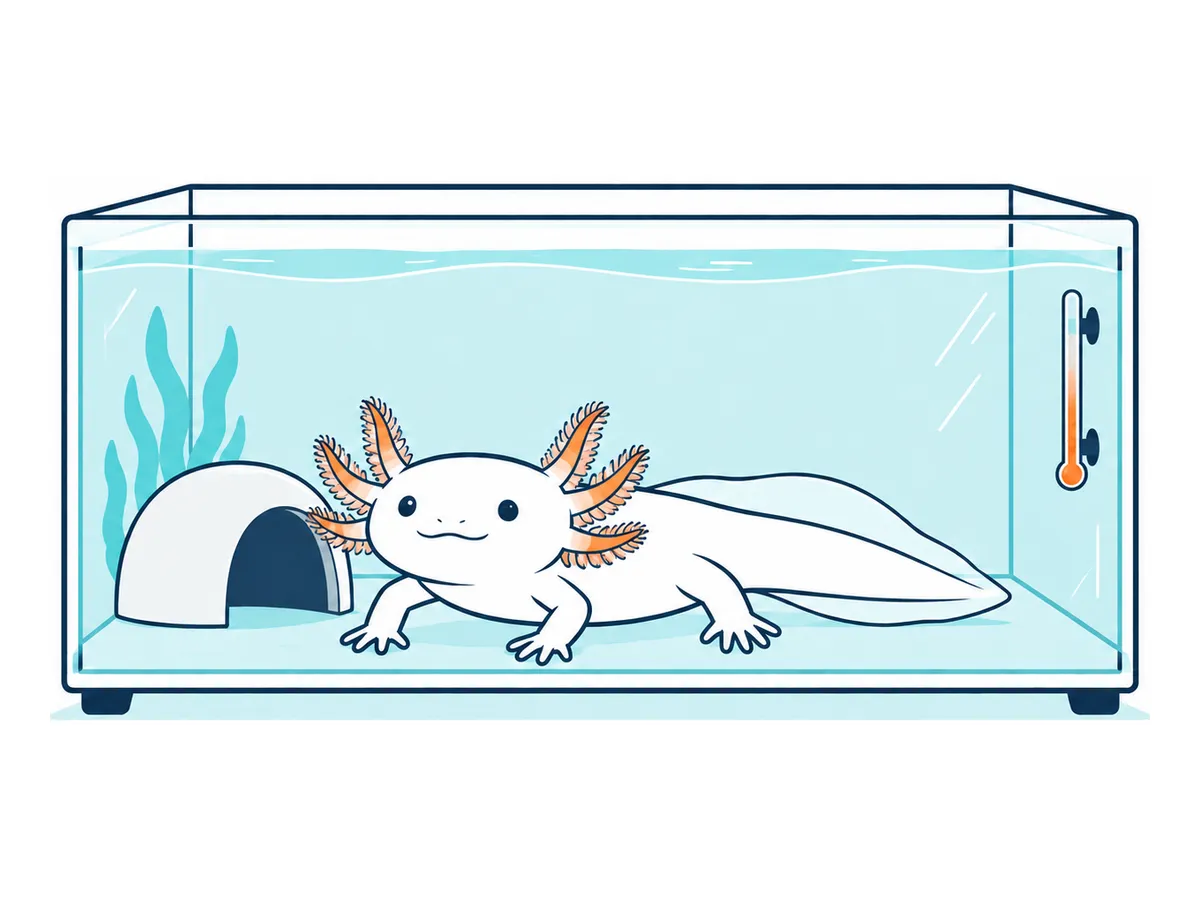
An axolotl (Ambystoma mexicanum) is a Mexican amphibian that lives in water all its life and keeps larval features as an adult, such as its external gills. It is an animal to watch rather than handle: it needs cool, clean water, a carnivorous diet and a vet with experience of exotic species. Before getting one, it is also worth checking the rules, which are currently changing in Spain.
What an axolotl is and why it is so special
The axolotl is a salamander, not a fish, even though it is sometimes called a “walking fish”. Its best-known trait is neoteny: it reaches adulthood and breeds without completing metamorphosis, so it keeps its flattened tail, its aquatic life and the feathery gills on each side of its head. The husbandry guide from the University of Kentucky centre that keeps laboratory axolotls explains that, despite looking like a larva, it develops lungs and sometimes rises to the surface to gulp air.
It is also famous for its ability to regenerate body parts, such as toes or limbs, which is why it is widely used in research.
The paradox is that there are many axolotls in aquariums around the world and very few in the wild. Its natural habitat is limited to the canals of Xochimilco, south of Mexico City, and the IUCN Red List classifies it as critically endangered. Keeping one at home does not replace conservation of wild populations: wild animals depend on their habitat being protected.
Axolotl, ajolote or axolote?
They are the same animal. “Axolotl” is the original form, from Nahuatl, while Spanish speakers mostly say “ajolote” or “axolote”. When we talk about the pet, all three refer to Ambystoma mexicanum; if you are unsure about the species of a particular animal, ask for it to be confirmed in writing.
Is an axolotl a good pet?
It can be for someone looking for a calm animal who is willing to look after an aquarium with discipline, but it is not a pet to pick up or for children to touch. Its skin and gills are delicate: avoid touching it or taking it out of the water. If you need to move it, ask your vet to show you how to use a suitable container while keeping it submerged and avoiding damage to its gills.
Before you decide, ask yourself:
- Can I keep the water cool all year round, including in the height of summer?
- Do I have time for regular water changes and tests?
- Is there an exotic vet nearby who treats amphibians?
- Have I checked which rules apply in my region?
If any answer is “no”, now may not be the right time. Also avoid sharing the tank with fish: they may nip its gills or end up as food.
How to set up an axolotl tank
Water is the foundation of its health. The University of Kentucky guide gives these guidelines:
- Temperature: 15–18 °C as the ideal range, and never above about 22 °C, because warmth is dangerous for them. In much of Spain this means placing the tank away from the sun and, often, using a chiller in summer.
- pH: between 6.5 and 8, with hard water; do not use distilled or very soft water.
- Chlorine: remove chlorine and chloramines from tap water with a conditioner before using it.
- Current: as gentle as possible. If the filter creates a lot of movement, reduce the flow or diffuse the outlet.
- Substrate: no small gravel, because they can swallow it. A bare bottom or stones too large to fit in their mouth avoids the problem.
Add a hiding place and remove uneaten food daily. Before introducing the animal, establish the aquarium’s biological filter: cycling allows beneficial bacteria to process waste. Test ammonia and nitrite, and do not add the axolotl while either remains detectable. Continue testing and making partial water changes afterwards; clear-looking water is not necessarily safe.
Feeding an axolotl
The axolotl is carnivorous. The Kentucky guide recommends soft pellets for juveniles and adults, supplemented with earthworms, daphnia or mosquito larvae. Young animals eat every day, while from about one year old feeding drops to a few times a week, in small amounts.
Some practical tips:
- Offer pieces it can swallow without effort.
- Remove leftovers so they do not break down in the water.
- Do not give it food meant for mammals or scraps from your plate.
- If it stops eating for several days, check the temperature and water quality first.
Axolotl health: warning signs and when to see a vet
Many problems start with water that is too warm or dirty. The same guide lists loss of appetite, deteriorating gills, a pale or yellowish appearance and small open skin sores as warning signs.
If you notice any of these changes:
- Measure the temperature and water parameters.
- Do a partial water change with conditioned water at the same temperature.
- Book an appointment with an exotic vet and bring notes of the readings and what you have seen.
Do not medicate it yourself or add products to the water without veterinary advice. Seek help promptly if it is not eating, floats uncontrollably, its gills are falling apart or it has sores that are getting worse. This guide does not replace a consultation with a professional.
What Spanish law says about keeping an axolotl
Spain’s Law 7/2023 on the protection of animal rights and welfare provides for a positive list of companion animals, organised by groups (including amphibians). Once the list for each group is approved, only the species included may be kept as companion animals. Until then, the law states that species already kept as companion animals follow the general rules for these animals.
In April 2026, the Ministry of Social Rights opened a public consultation on the royal decree that will regulate these lists. Before getting an axolotl, check whether the amphibian list has been approved and what your region requires.
Never release it into a river, pond or fountain either. Spain’s Law 42/2007 on Natural Heritage and Biodiversity prohibits the unauthorised release of non-native species into the wild. If you can no longer care for it, look for a responsible solution. And if you would like to live with an amphibian, have a look at the amphibians for adoption on Miwuki Pet Shelter (in Spanish) and always ask about the species and its paperwork.
The transitional regime is not a blanket authorisation: the prohibitions in transitional provision two, regional rules and lawful-origin requirements still apply. Check the status of the specific species with the competent authority before acquiring it.
Keep a record of water tests and your vet’s instructions. Miwuki Pet Life helps organise pets’ health records and reminders; see the Miwuki pet care app’s features. No app replaces aquarium tests or veterinary advice.
Conclusion
The axolotl is a fascinating but demanding animal: cool, clean water with little current, a carnivorous diet and minimal handling. Before taking the step, make sure you can maintain those conditions all year round and check the rules in force. If you already live with one, keep an eye on its gills and appetite, and ask your vet about any change.