Why does my cat attack me suddenly? Causes and what to do
If your cat suddenly attacks you, even violently, the first thing to do is get yourself safe: step away, do not punish them or try to pick them up, and let them calm down in another room. These attacks are usually caused by redirected aggression, fear, pain or misdirected play. If they have bitten or scratched you badly, wash the wound and seek medical care; then book a vet appointment to rule out pain or another health problem.
Why does my cat suddenly attack me?
An attack that seems to come out of nowhere almost always has a cause, even if you did not see it. Veterinary guides highlight several:
- Redirected aggression: something has upset them and they take it out on you.
- Fear or defensive aggression: they feel threatened and cannot escape.
- Pain: something hurts and they react to being touched or moved.
- Misdirected play: they treat your hands or feet as prey.
- Petting: some cats attack when contact goes on too long. If that sounds familiar, read our guide on why your cat bites when you pet them.
Redirected aggression: when “my cat attacked me viciously”
It is one possibility when a normally calm cat attacks intensely; the force of the attack alone cannot identify the cause. It happens when something excites or frightens them (a cat at the window, a noise, a smell) and they cannot respond to it, so they direct the attack at whoever is nearby. The ASPCA considers it probably the most dangerous type of aggression, because the cat does not hold back the force of the bite, and notes that the attack can happen even hours after the trigger.
Misdirected play: when your feet become prey
Stalking, chasing, ambushing and pouncing on ankles are typical of hunting play. The ASPCA explains that this is the most common type of aggression towards owners and that it mainly appears in young cats, under two years old. It tends to happen when the cat has no other way to burn off energy or when people have played with them using their hands.
Fear and pain
A frightened cat may attack if they feel cornered: by a visitor, a child chasing them or an attempt to put them in the carrier. And pain changes anyone’s temper. The ASPCA points out that even a well-socialised, docile cat can lash out when in pain, and Cornell mentions problems such as arthritis or dental disease.
Serious attack or rough play? How to tell them apart
Watch their body before and during the attack:
- Offensive posture: stiff, upright body, direct stare, ears rotated forward, dilated pupils, growling or low yowling.
- Defensive posture: crouched, head tucked, ears flattened, dilated pupils, hissing and quick swipes with the front paws.
- Play: stalking, running and pouncing on something that moves, usually without hissing or growling.
Even if it is play, it needs redirecting if it causes injuries. And if there is hissing, growling, chasing or bites that do not let go, treat it as a serious attack.
What to do in the moment: safety first
- Do not punish them. The ASPCA warns that physical punishment does not change a cat’s behaviour and can trigger more aggression.
- Do not touch them or try to reassure them while they are showing attacking or defensive postures.
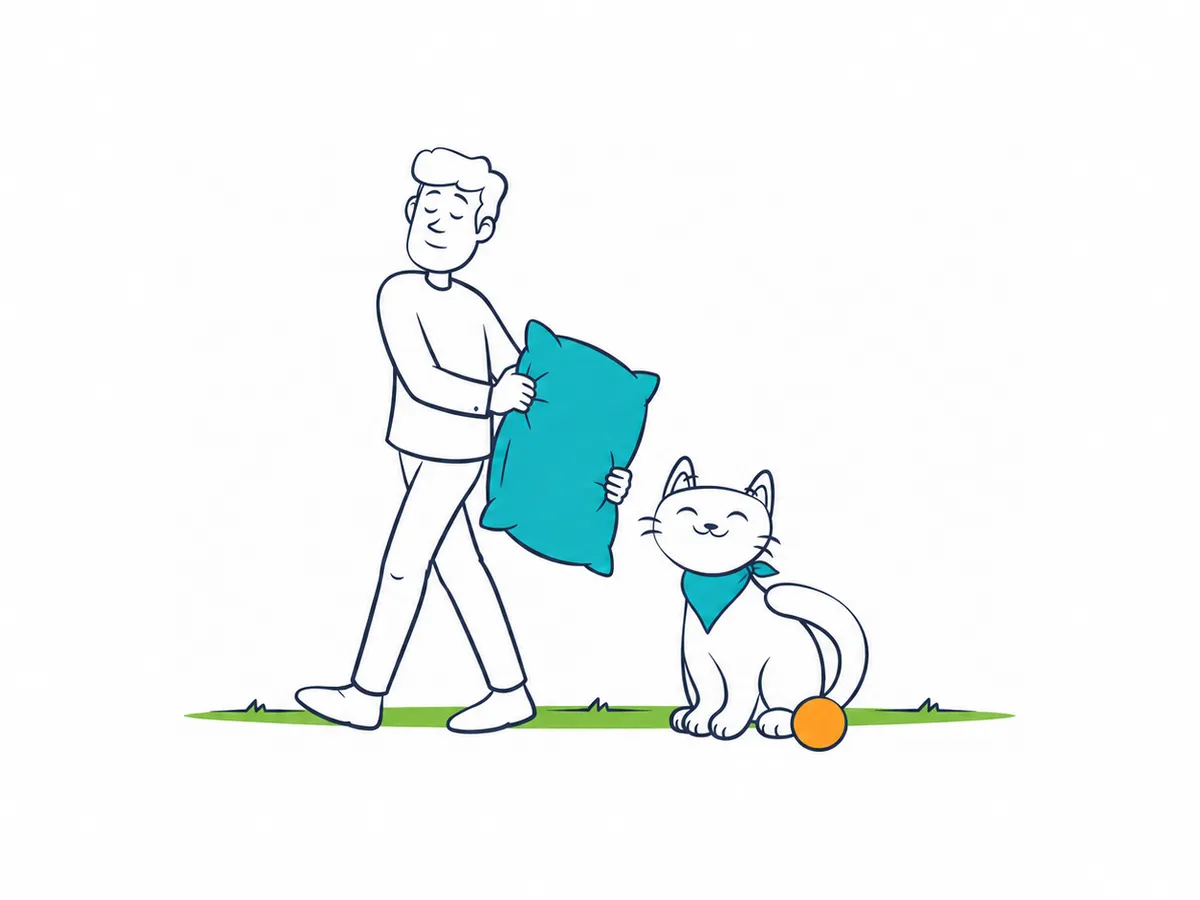
- Step away and use a barrier. Leave the room and close the door. If they have to pass near you, put a cushion or blanket between you, never your hands.
- Leave them alone until they calm down. After redirected aggression they may need quite a long time. Do not seek them out to “make up”.
- Protect others. Keep children and other animals away until your cat is calm again.
- Write down what happened: the time, the place, what you were doing and what you saw just before. It will help you find the trigger.
If you have been bitten or scratched
Cat bites are painful and, as the ASPCA notes, can easily become infected. Scratches can also transmit cat scratch disease. The NHS, the UK’s health service, recommends:
- Washing the wound with warm water and soap.
- If it is bleeding heavily, pressing a dressing or clean cloth firmly onto it.
- Patting it dry and covering it with a clean dressing.
If a cat bite breaks the skin, seek prompt medical assessment even if it looks small. This is especially important if it is on your hands, feet, face or head; if the area becomes hot, swollen or red or has discharge; if you have a high temperature or shivering, or if your tetanus vaccination is not up to date. A large or deep wound, or bleeding that will not stop, needs emergency care. In Spain, go to your health centre or to A&E and explain that you were bitten by a cat.
How to prevent further attacks
- Identify and limit triggers. If they get agitated at the sight of cats through the window, cover the lower part of the glass or restrict access.
- Play with toys, not hands. Use wand toys and toys that keep your hands at a distance; these ideas for safe homemade cat toys may help.
- Schedule daily play sessions, especially if your cat is young, so they can use up their hunting energy.
- Respect their signals. If they turn their head towards your hand, flick their tail or flatten their ears, stop.
- Give them escape routes and hiding places, so they never feel cornered.
- Reward calm behaviour with treats when they are relaxed near you.
When to see a vet and a behaviourist
The ASPCA stresses that the first step in resolving an aggression problem is a complete veterinary examination. Illnesses such as hyperthyroidism, arthritis, dental problems or abscesses may be behind it. Book an appointment especially if:
- The attacks are new in a cat who used to be calm.
- They keep happening or are getting worse.
- You notice other changes: eating less, limping, hiding or not using the litter tray.
If the vet rules out a medical cause, the best approach is to work with a clinical animal behaviourist or a veterinary behaviour specialist. Cornell notes that early intervention is best and that, when medication is used, it works alongside behavioural and environmental changes, never on its own. This guide does not replace a professional assessment.
Conclusion
A cat attacking you, even violently, does not mean they are “bad” or that they hate you. There is usually a trigger: something that upsets them, fear, pain or play energy with no outlet. Protect yourself without punishing them, look after any wound properly and see your vet early to find the cause and live together calmly again.