Cat bleach poisoning: symptoms and what to do
If your cat has drunk or licked bleach, move them away from the product, do not make them vomit, do not give them anything yourself, and call your vet or a 24-hour emergency vet straight away with the packaging to hand. Diluted household bleach usually causes irritation and mild stomach upset, but concentrated bleach, or bleach mixed with other products, can burn the mouth, oesophagus and airways. That is why each case needs to be assessed by a vet.
My cat drank bleach: what to do now
Stay calm and follow these steps:
- Move your cat away and remove the product. Only do so if you can enter without exposure to fumes. If products have been mixed or the smell is irritating, leave the area and get help; do not risk exposure to remove a bucket. Wear gloves when touching contaminated surfaces.
- Do not make your cat vomit. Bleach is corrosive: coming back up, it can damage the oesophagus and mouth again.
- Do not give milk, oil, home remedies or medicines. Some veterinary guides mention offering water or milk after bleach has been swallowed, but it depends on the product, the amount and your cat’s condition. It is a decision for your vet, not something to improvise.
- Call your vet or an emergency service. Keep the packaging in front of you: type of bleach (regular, concentrated, with detergent, gel), concentration if stated, how much you think your cat has taken and how long ago.
- If it has got on their fur or skin, stop them licking it and ask your vet how to wash it off; mild soap and plenty of water is the usual approach.
- If it has splashed into their eyes, rinse with plenty of water if you can do so without a struggle, and see your vet.
- Take your cat in a carrier, without forcing them to eat or drink on the way.
This guide is for information only and does not replace veterinary care. If in doubt, treat it as an emergency.
Symptoms of bleach poisoning in cats
Signs depend on the product’s concentration, the amount and whether your cat swallowed, licked or inhaled it. The most common are:
- Heavy drooling, very typical in cats.
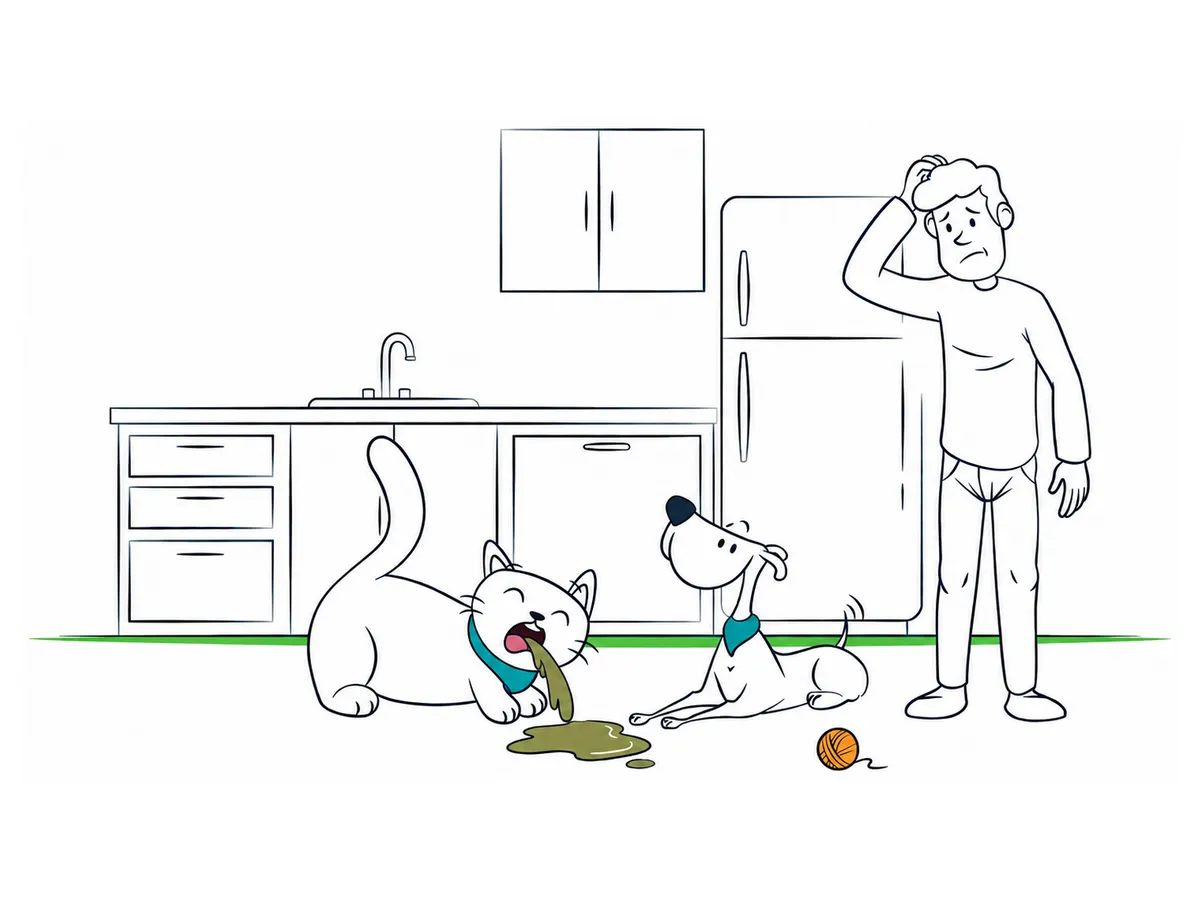
- Vomiting, which may contain blood, and sometimes diarrhoea.
- Redness or ulcers on the tongue and in the mouth.
- Difficulty swallowing or pawing at the mouth.
- Loss of appetite and lethargy.
- Coughing, gagging, sneezing or difficulty breathing if they inhaled fumes.
Severe cases can involve seizures or collapse. Any breathing difficulty, vomiting blood or marked lethargy is an immediate emergency.
Symptoms that may appear later
A cat who seems fine at first is not necessarily in the clear. The Merck Veterinary Manual explains that animals exposed to concentrated chlorine fumes may develop fluid in the lungs 12 to 24 hours later, and that mixing bleach with ammonia can cause severe breathing distress within the same period. That is why your vet may recommend monitoring or keeping your cat under observation even if they arrive calm.
Diluted, concentrated or mixed bleach: why it matters
Not every exposure is the same:
- Diluted household bleach (for example, mop water): according to the Merck Veterinary Manual, it rarely causes more than mild vomiting, drooling, lethargy, loss of appetite or diarrhoea. Even so, call your vet, because you do not always know how much bleach was in the bucket.
- Undiluted or concentrated bleach: it can cause significant corrosive injury to the mouth, throat and stomach, as well as irritating the skin, eyes and airways.
- Bleach mixed with other products: mixing it with ammonia produces a highly toxic gas. If you have combined products while cleaning, tell your vet even if your cat has not drunk anything.
A common example: you clean the bathroom, your cat walks in before the floor is dry and then licks their paws. Even if the amount is small, it is worth calling your vet so they can tell you whether monitoring at home is enough.
What happens if a cat drinks chlorinated water?
This is a frequent question, and the answer depends on the type of water:
- Tap water: it is treated to be safe to drink. Water declared safe to drink may have a faint chlorine smell; this is different from cleaning water or a contamination incident.
- Well-maintained pool water: according to Pet Poison Helpline, a veterinary toxicology service, drinking a small amount is not immediately concerning. If the pool is over-chlorinated or your cat drinks a lot, it can cause vomiting and diarrhoea.
- Chlorine tablets and pool shock products: they are highly concentrated and extremely corrosive. If your cat has licked or chewed them, it is an emergency, and vomiting should not be induced either.
- A toilet with tablets or bleach: treat it as a bleach exposure and call your vet.
Why some cats are attracted to bleach
Some cats show a striking interest in the smell of bleach or chlorine: they roll on a freshly mopped floor, rub against the mop or lick the surface. The reason is not known for certain, and not every cat reacts this way.
If yours does, keep it in mind when you clean. One possible exposure is stepping or lying on a damp area and then grooming: while they wash, they swallow whatever is on their fur and paw pads.
How to clean with bleach without putting your cat at risk
Prevention is simple if you make these habits part of your routine:
- Dilute bleach as the label says and do not make it stronger “so it cleans better”.
- Never mix it with ammonia or with other cleaning products.
- Keep your cat in another room while you clean and until the floor is dry.
- Rinse surfaces your cat may walk on or lick with water, and air the room well.
- Do not leave mop buckets or a toilet with bleach within reach: empty the bucket and close the lid.
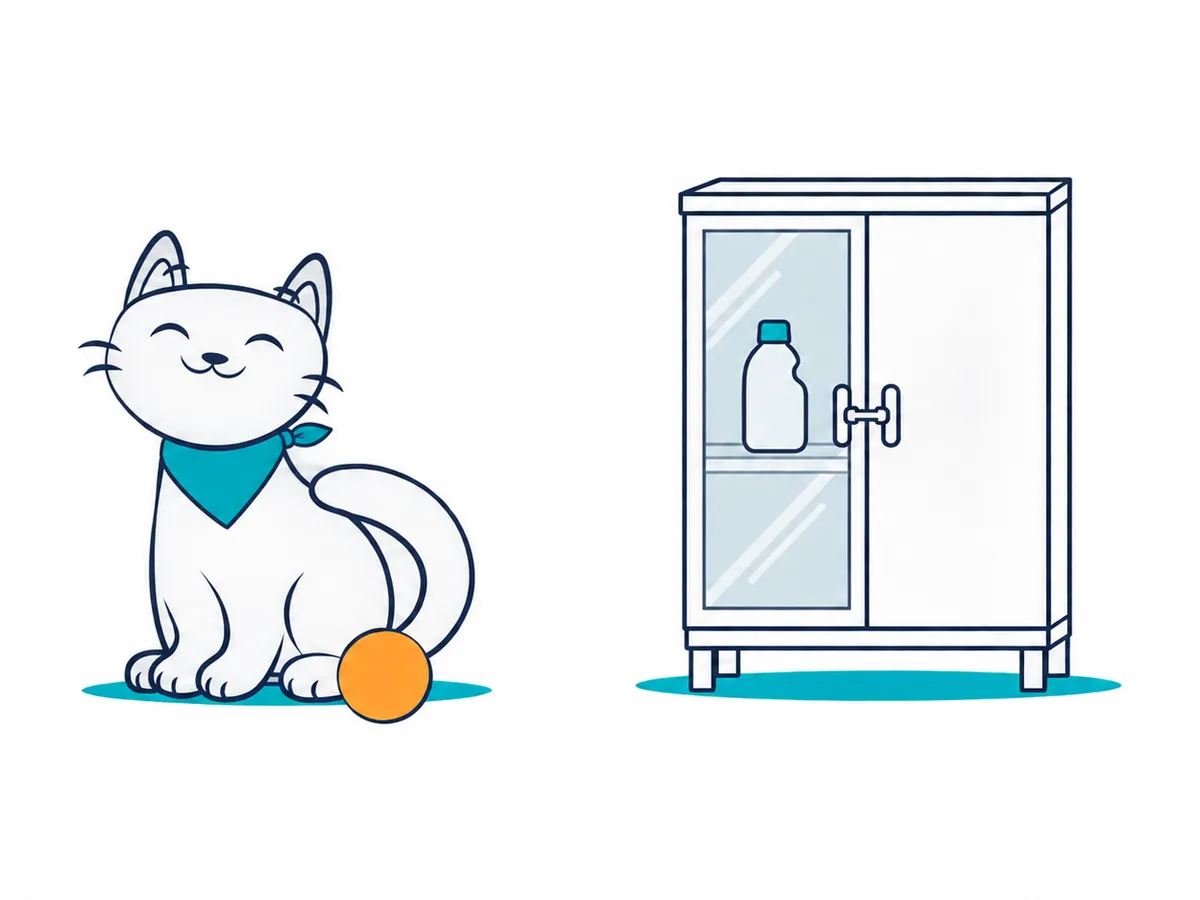
- Store products closed in high or lockable cupboards.
There are other, less obvious hazards at home besides cleaning products. Check our list of foods that are toxic to dogs and cats too. And as poisoning can mean emergency visits, tests or a hospital stay, you may want to look at Miwuki’s veterinary insurance for cats.
To bring an organised history to appointments, you can keep your pet’s care records and reminders in Miwuki Pet Life. Always follow your vet’s individual advice.
Conclusion
If your cat has drunk bleach, the key is to act quickly without improvising: move them away from the product, do not make them vomit, do not give them anything yourself and call your vet with the packaging. Diluted bleach usually causes mild symptoms, but concentrated or mixed bleach can be serious. And with a few simple cleaning habits, most of these scares can be avoided.