Introducing a dog and rabbit: safe steps and limits
A dog and a rabbit can sometimes learn to live together, but it is never guaranteed: dogs are predators and rabbits are prey animals who experience fear very intensely. If you decide to try, introduce them gradually, with the dog on a lead and the rabbit protected in their own space, and never leave them alone together, even if they seem to get on. With some dogs, the safest option is for them never to share a space.
Can a dog and a rabbit live together?
It depends mostly on the dog. The Rabbit Welfare Association & Fund (RWAF), a UK rabbit welfare charity, points out that any species that evolved to hunt small mammals keeps that motivation. A calm, well-trained dog may learn to ignore a rabbit, but many adult dogs will never be trustworthy around one.
For the rabbit, having a predator nearby is stressful in itself. The RSPCA stresses that rabbits need to be able to hide somewhere secure, away from the sight and smell of predators such as foxes, cats and dogs. This is not a minor detail: extreme stress can trigger shock in a rabbit, which can be fatal in severe cases.
There is another important point: a dog is not company for a rabbit. Rabbits need another rabbit for their physical and mental health, so even if living together works, the dog does not replace a companion of their own species.
Dog and rabbit compatibility: what matters
- The dog’s prey drive. It varies between breeds and individuals. The RWAF gives a clear example: it is much easier to teach a collie, bred to herd, to ignore rabbits than a terrier, bred to kill small mammals.
- Their history. If the dog has already chased or caught rabbits, cats or other small animals, the reward of that behaviour may be so great that they can never be trusted again.
- Their training. They must respond reliably to cues such as “sit”, “down” and “leave it”.
- The rabbit’s temperament. A very fearful rabbit may never adapt to having a dog nearby.
Before the first introduction
Preparation matters as much as the meeting itself. Before bringing them together:
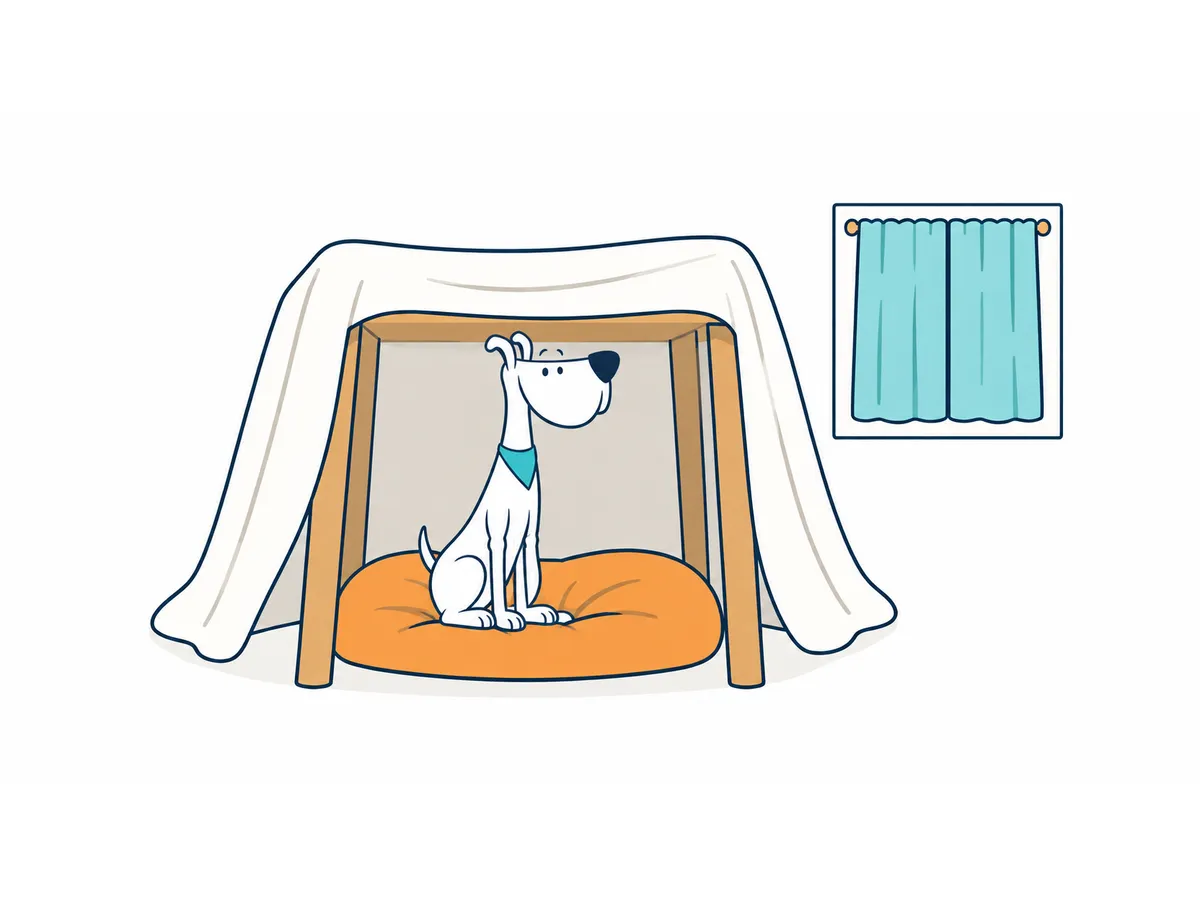
- Give the rabbit a safe space the dog cannot reach, with hiding places where they can retreat without seeing or smelling the dog.
- Practise basic cues with your dog until they respond even with distractions.
- Tire your dog out before each session with a good walk or play. The RWAF explains that a highly excited dog has less impulse control, which makes the rabbit more likely to run, which in turn excites the dog even more.
- Check parasite control for both animals with your vet. Dogs can pass fleas and some tapeworms to rabbits.
How to introduce a dog and a rabbit step by step
The RWAF suggests a gradual method. Adapted for home, it looks like this:
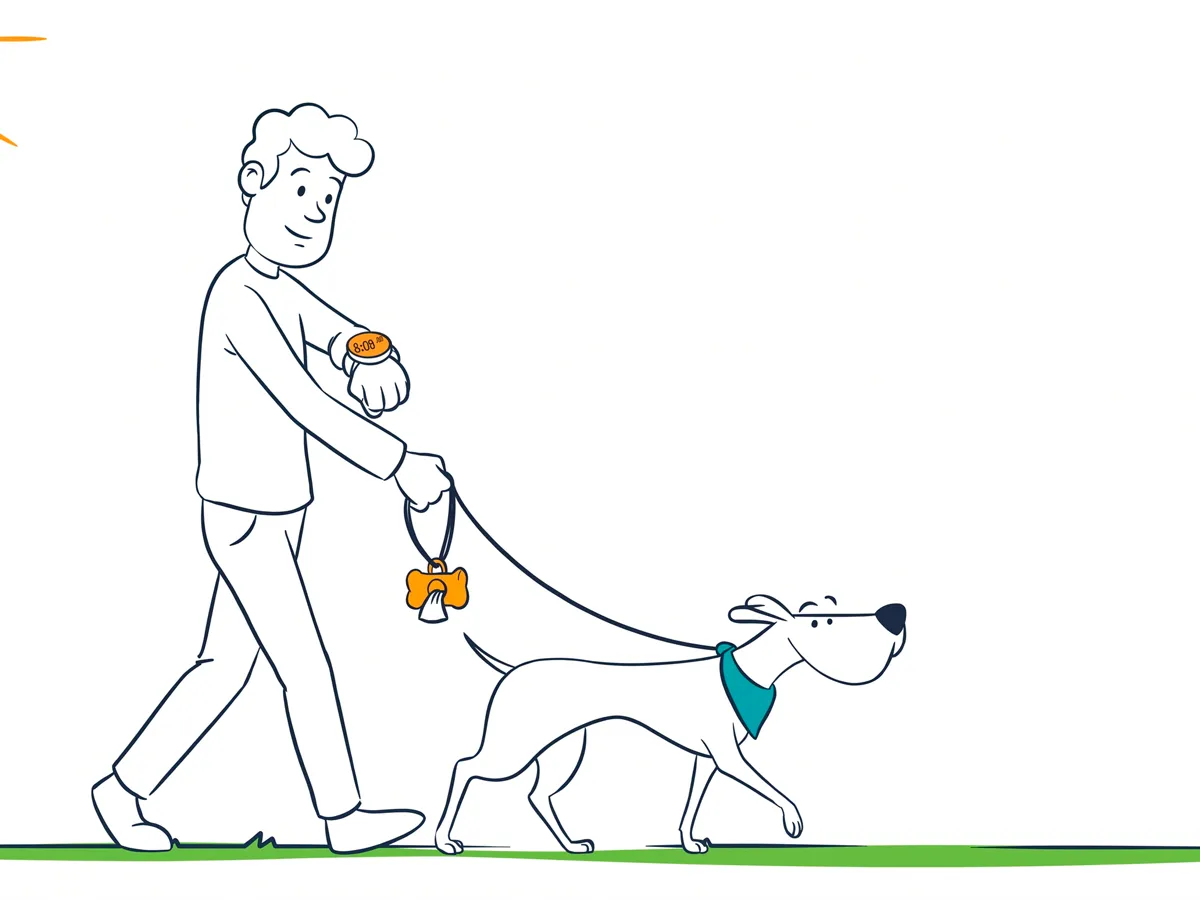
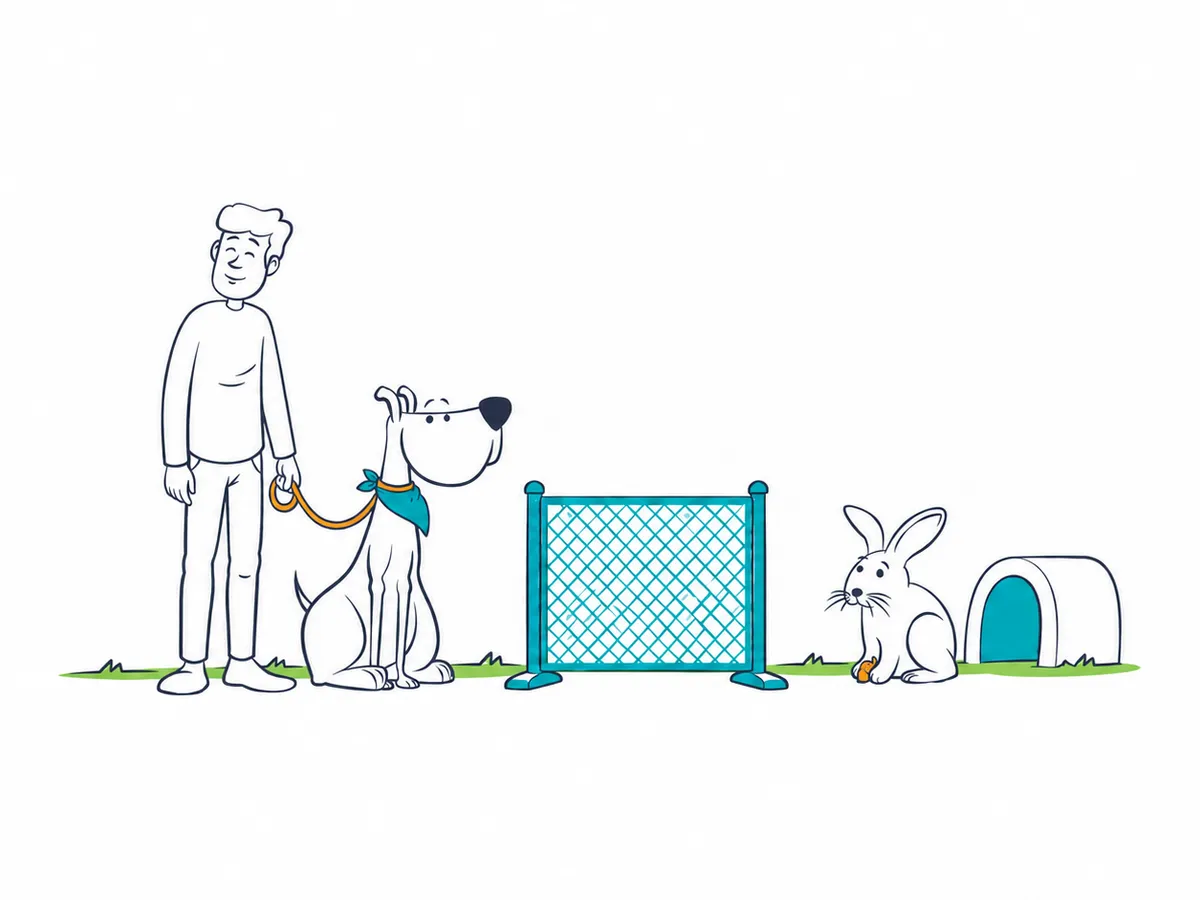
- A calm dog on a lead. Take a quiet walk beforehand and let them settle; do not exhaust them or wind them up with intense play. The rabbit stays in their enclosure or behind a barrier the dog cannot jump over or push.
- Start at a distance. Ask your dog to sit and reward them with a treat while they stay calm.
- Move closer little by little, rewarding calm behaviour. If your dog gets excited, go back to the previous distance.
- Short sessions. About five minutes, then out of the room, before your dog runs out of patience.
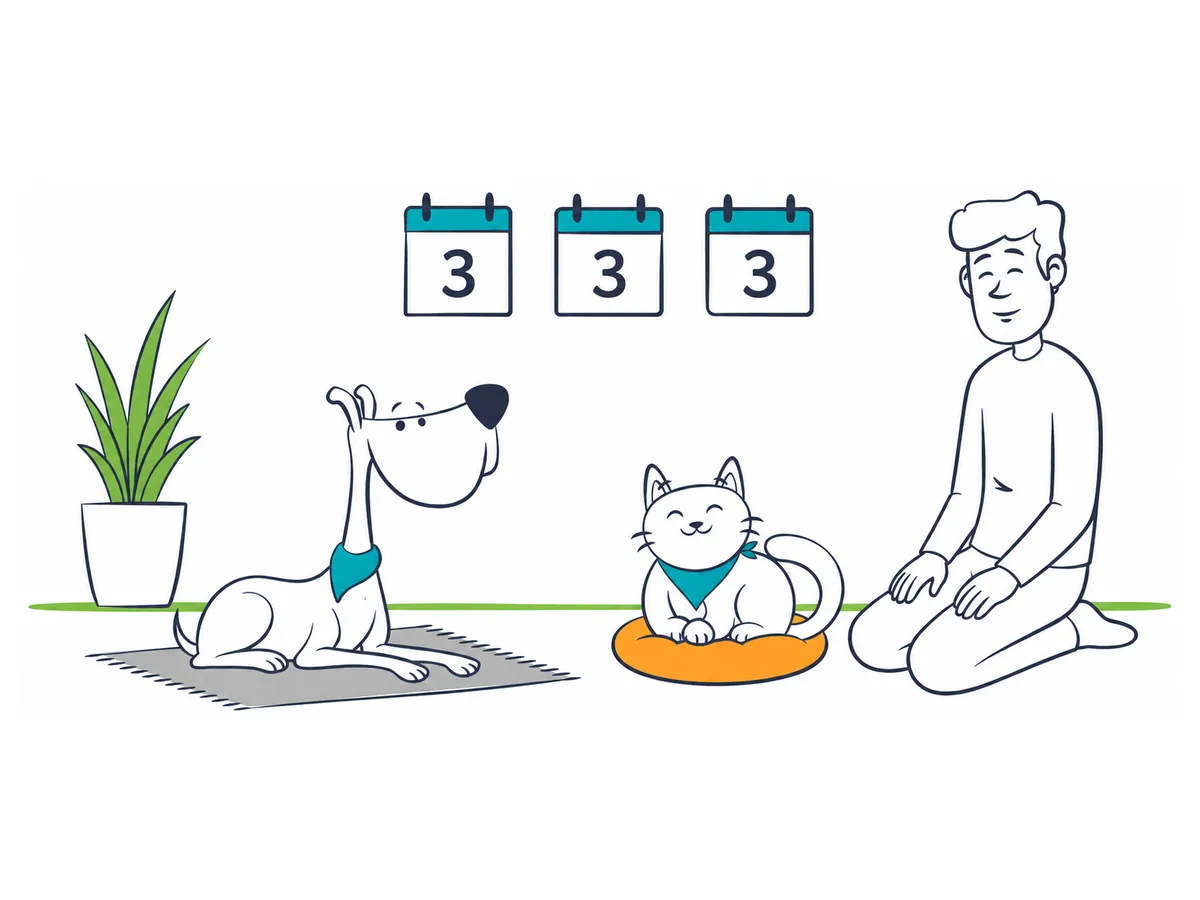
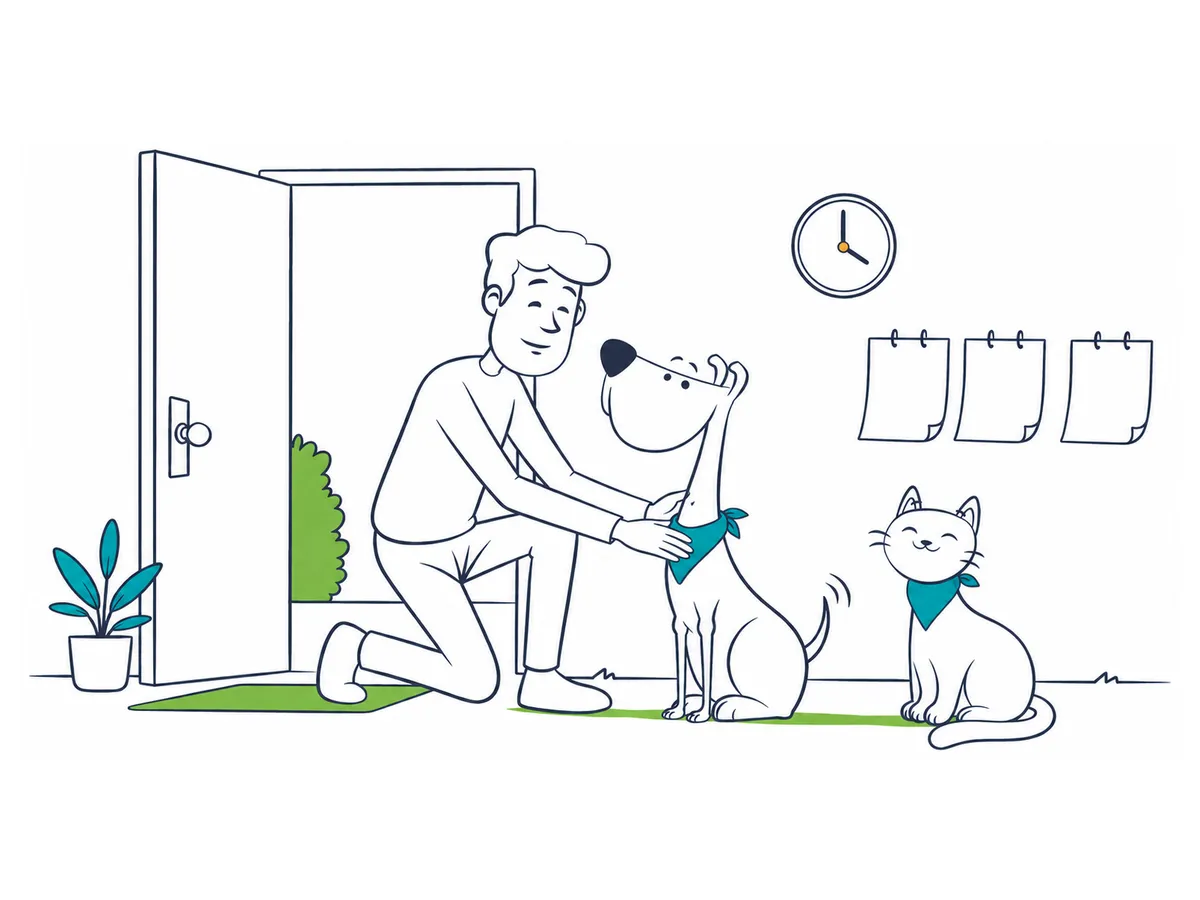
- Repeat over days or weeks. Only progress when both animals have been relaxed for several sessions in a row.
- No rush to let them loose. Even if your dog ignores the rabbit, keep the lead and barrier for a long time. If you are unsure about the next step, ask a dog trainer or a behaviour professional.
A realistic example: after two weeks of sessions, your dog lies down when they see the rabbit and looks at you waiting for a treat. That is good progress, but it does not mean you can leave them together in the living room unsupervised.
Supervision is not optional
The most important rule is simple: never leave a dog alone with a rabbit, even if they have lived together without problems for months. A noise, a sudden sprint by the rabbit or a game that gets out of hand can trigger the dog’s instinct in seconds. When you are not there, each one stays in their own space.
Signs of stress: when to stop
In the dog
Stop the session and take your dog out of the room if they tense up, stare fixedly at the rabbit, whine, bark or lunge. These are signs of arousal that can end in a chase.
In the rabbit
Rabbits show fear quietly. According to the RSPCA, watch out for:
- Thumping their hind legs on the ground.
- Hiding and refusing to come out.
- Crouching with tense muscles, their head flat to the ground and dilated pupils.
If they also stop eating or their toileting changes, stop the introductions and contact your vet. In a rabbit, not eating is a reason to seek advice quickly.
When living together is not possible
Sometimes the responsible choice is to accept that it will not work. Consider this if:
- Your dog has hunted or chased small animals and cannot settle near the rabbit.
- After many sessions, your dog still fixates on the rabbit with tension.
- The rabbit shows constant fear even when the dog is far away and calm.
- Your household cannot guarantee that they will always be separated when nobody is watching.
In these cases, the safe option is to keep them in completely separate spaces. If you are looking for company for your rabbit, another rabbit is ideal. You can browse rabbits for adoption on Miwuki Pet Shelter (in Spanish) and talk to their carer about their temperament before deciding. And if you also have a cat, many of the principles are similar to introducing a new cat to a dog.
What to do if your dog chases or attacks the rabbit
Separate the animals without putting yourself at risk and take the rabbit to a vet as soon as possible, even if you cannot see any wounds. A rabbit who has had a serious fright may be injured or in shock without looking it. On the way, keep them in a quiet carrier, in dim light and away from the dog.
If the dog has bitten the rabbit, do not wait to see how things develop: internal injuries and infections are not always visible at first. This guide is for information only and does not replace an assessment by a vet or a behaviour professional.
Conclusion
Dogs and rabbits can live together in some homes, but it depends on the dog’s instinct, their training and a lot of patience. Introduce them in stages, with a lead and barriers, watch for signs of stress and never leave them alone together. And if it does not work, keeping them apart is also a way of caring for both.